Arctic Shores Assessment: What the Games Measure & How to Prepare
Arctic Shores builds the "task-based" assessments used by major UK and European employers — no questions, just behaviour watched over thousands of data points. What each task type measures, what is trainable, and the free games to practice on.
Arctic Shores is a UK-based assessment vendor whose task-based assessments screen candidates at large employers across banking, professional services and the public sector (Siemens, several UK banks and government schemes have used it over the years — your invite will name the assessment explicitly). The pitch: instead of asking questions, it gives you short interactive tasks and records thousands of behavioural data points — how fast, how consistent, how bold, how systematic you are.
A typical assessment runs 30–45 minutes on your phone or laptop and mixes cognitive tasks with trait-revealing ones. No prior knowledge is tested, and there are no right answers on the trait tasks — but the cognitive core is measurable, benchmarked, and very much trainable.
The task types you are likely to meet
Quantity estimation. Judge which side has more dots or tokens, fast — numerosity perception, one of Arctic Shores' signature measures. The numerosity game trains this exact judgement; a few sessions noticeably sharpen your thresholds.
Memory grids and sequences. Remember highlighted positions or growing sequences — visuospatial working memory. Train it with Corsi block, plus digit span for the verbal channel.
Reaction and inhibition tasks. Tap on the go-signal, hold back on the stop-signal. Measures processing speed and self-control. Baseline speed responds well to practice on the reaction time test; the inhibition side rewards calm more than aggression.
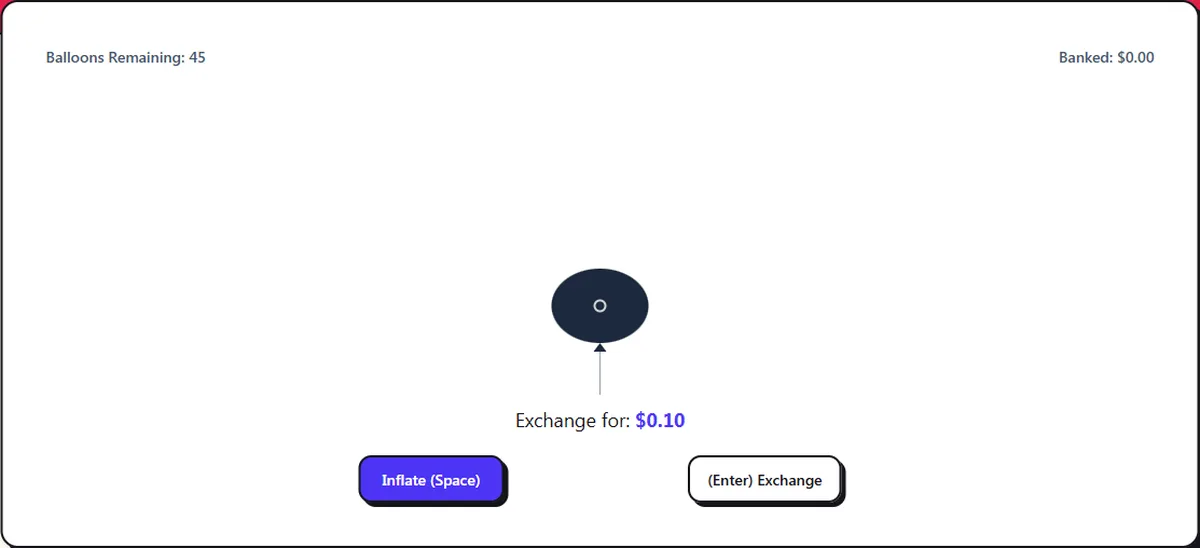
Balloon-style risk tasks. Inflate for reward, lose it if it bursts — risk appetite calibration. Like all trait tasks: play naturally and consistently. The profile is cross-checked, and erratic strategies read as noise, not brilliance.
Planning puzzles. Multi-step arrangement or routing problems scored on efficiency. The look-before-you-act habit from the pathfinder puzzle transfers directly.
The Arctic Shores games, one by one
Candidates nickname the individual games — Arctic Shores doesn't publish the rules, so treat your invite as the source of truth. We break each one down and point you to the closest free practice:
- Balloon game — a risk/impulse task you play naturally rather than "beat".
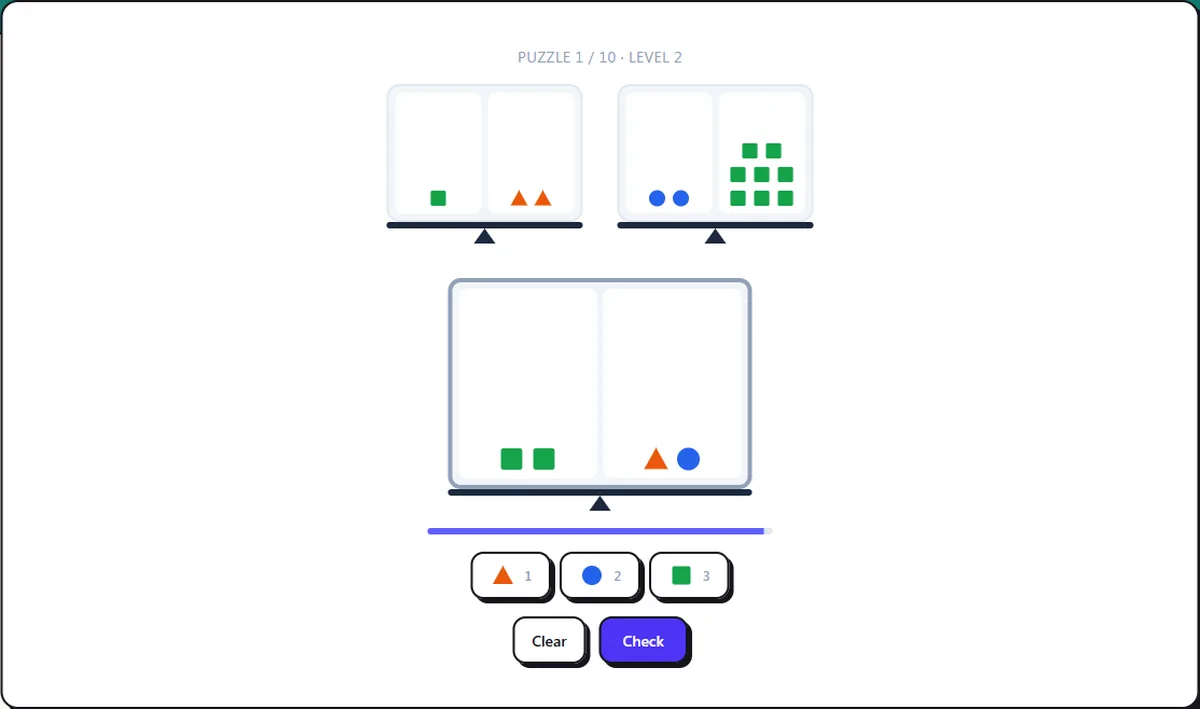
- Balance game — a scales puzzle: shapes with hidden weights, work out what balances the last scale (practise it free).
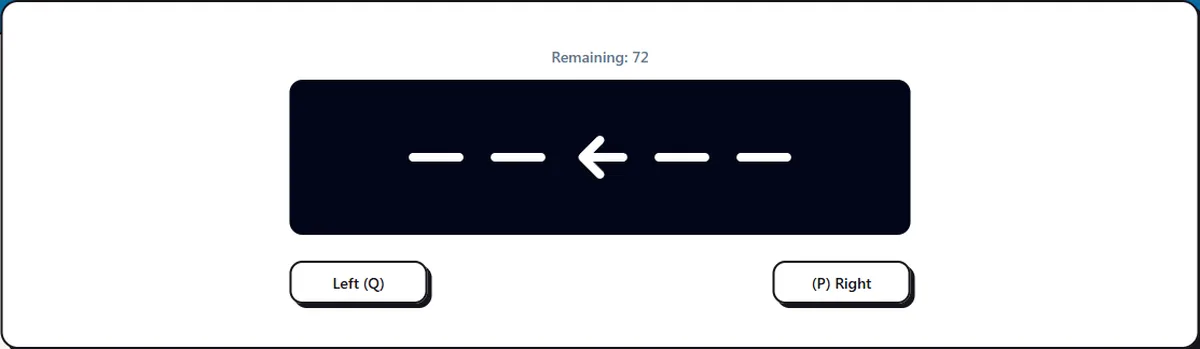
- Direction game — an arrows task: answer the middle arrow with Q or P, faster every round (practise it free).
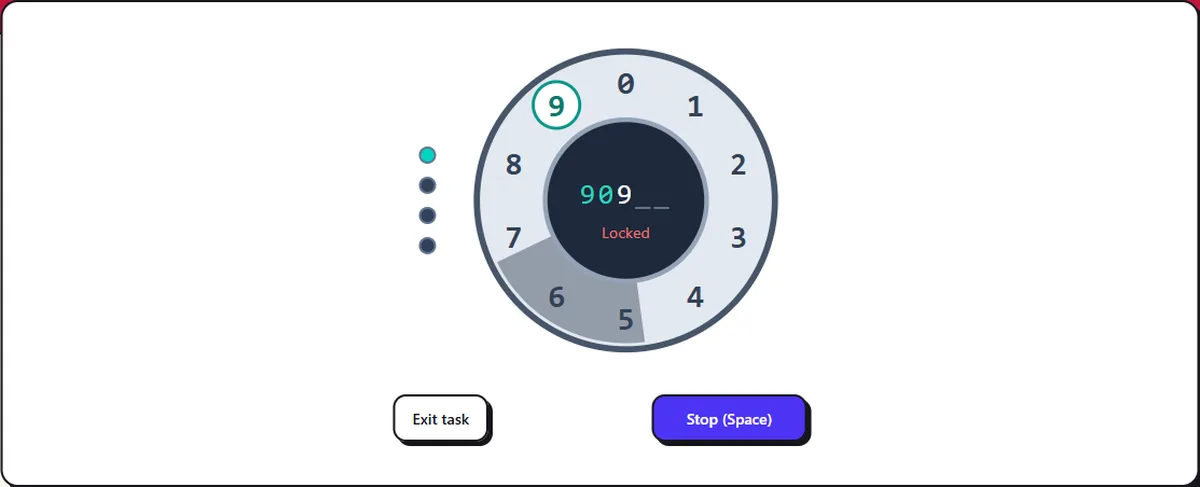
- Lock game — the Security task: a safe of four five-digit locks; stop a sweeping shade on each digit, and one miss sends you back to the start (practise it free).
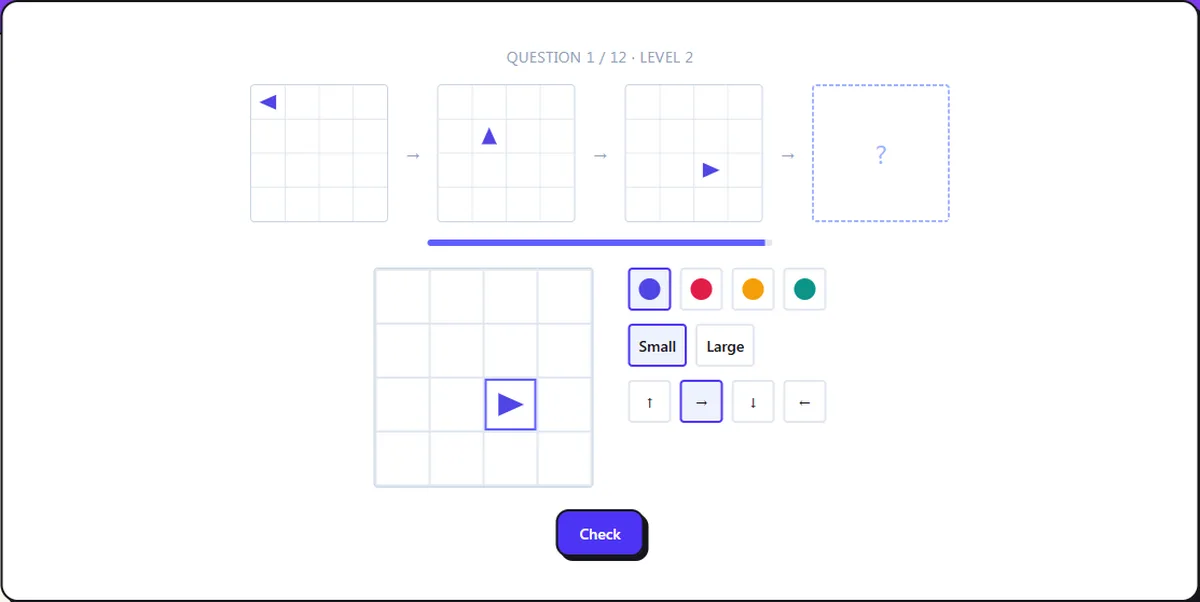
- Order game — three frames of shapes changing by rules; build the fourth with buttons (practise it free).
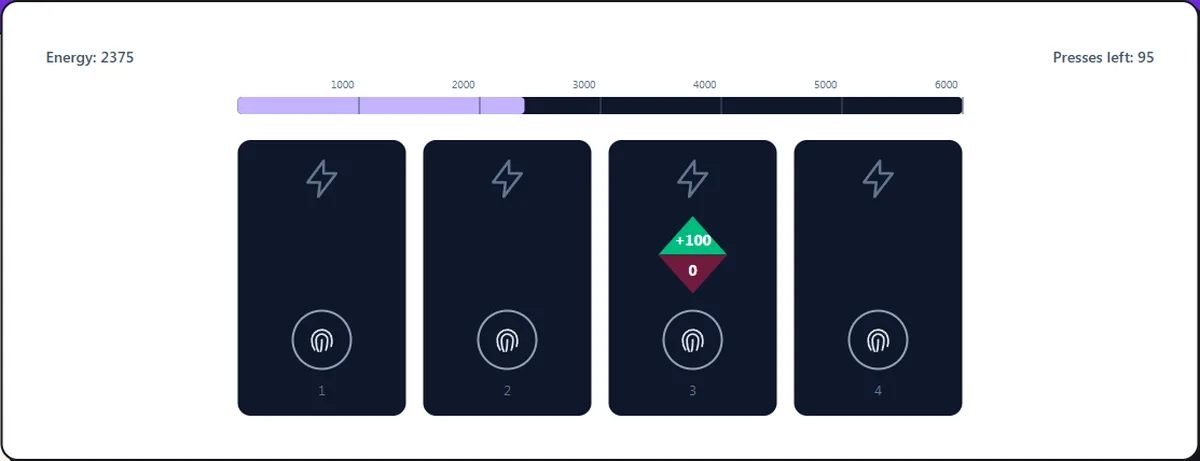
- Energy game — the power generator task: four generators, gains and occasional losses, an energy bar from 1,000 to 6,000 (practise it free).
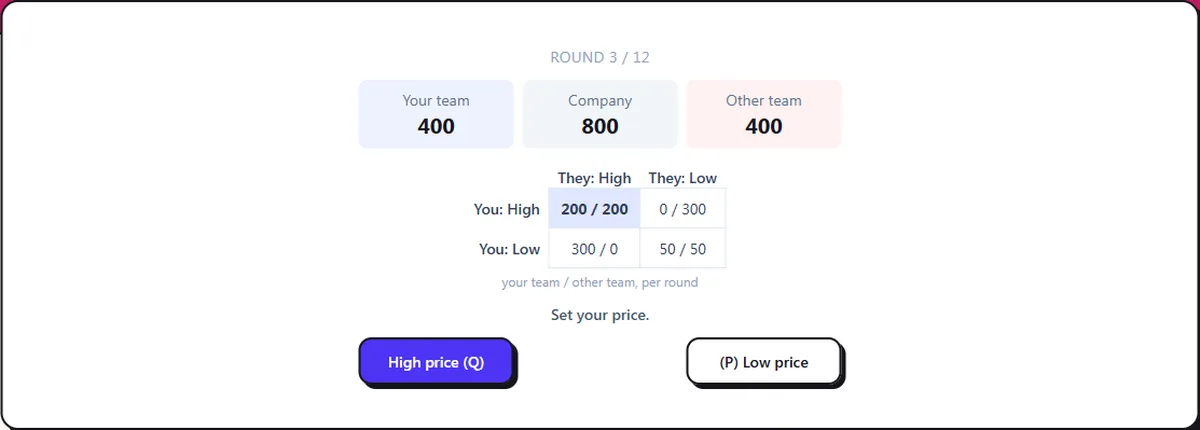
- Team Sales game — two teams selling for the same company each set a High or Low price; earn for the company and keep up with the other team (practise it free).
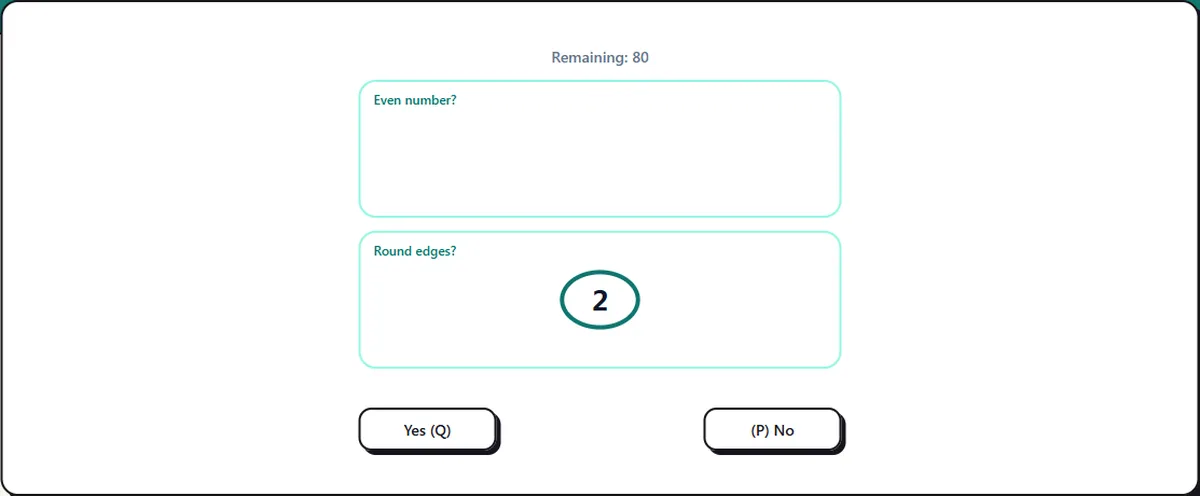
- Ticket game — a shape with a number in a top or bottom box: top asks about the number, bottom about the shape, Yes or No on Q and P (practise it free).
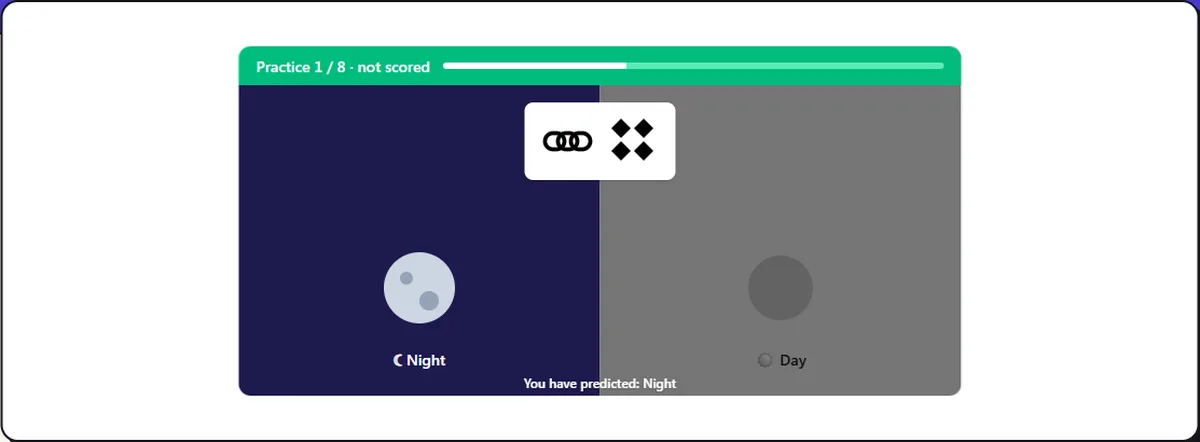
- Predict game — the "day and night" game: learning from feedback which way each pair of symbols usually goes (practise it free).
How it is scored
Behavioural data points are aggregated into trait scores (processing capacity, risk propensity, resilience, innovation potential and similar) and compared against a benchmark for the role. There is no pass mark shown, and results usually cannot be "resat" within the same application — the quiet-benchmark mechanics are the same across the industry (see can you fail a game assessment).
One Arctic Shores particularity worth knowing: because the assessment watches behaviour over time, consistency carries unusual weight. Wild strategy switches mid-task — cautious for ten rounds, reckless for five — muddy your profile more than a mediocre but steady performance would.
Preparation plan (5 days)
- Day 1: Cold run of the four practice games above. Note percentiles; pick the weakest two.
- Days 2–4: 15–20 minutes daily on those two. For estimation and memory tasks the gains come fast; for reaction speed the win is a stable average.
- Day 5: One full back-to-back session under exam conditions. Then rest — fresh working memory beats one more practice run.
Practical notes for the day: charge the device, use headphones if audio is allowed, read each task's tutorial screens slowly (rules differ subtly between similar-looking tasks), and never switch apps mid-assessment.
FAQ
Can I practice the actual Arctic Shores tasks? The vendor provides a short familiarisation inside the assessment. Everything beyond that is skill-level practice — which is what transfers anyway.
Phone or laptop? Whichever your invite recommends; if both are allowed, pick the device you game more comfortably on.
Can I retake it? Within one application, generally no. New application, new assessment — but expect your profile to look similar unless the underlying skills changed.
GamePrep is an independent practice platform, not affiliated with Arctic Shores. Client lists and task sets evolve — verify details against your assessment invitation.