How I Passed My HireVue Game Assessment (After Failing My First One)
A candidate's honest account: bombing a game assessment cold at midnight, figuring out what actually went wrong, and walking into the next one prepared — with the exact checklist that made the difference.
The first game assessment I ever took, I failed. Not "felt bad about it" — actually failed: a polite rejection email nine days later, for a graduate role I was well qualified for on paper. The second one, a few weeks later at another company, I passed and eventually got the offer. Same brain, same CV. The difference was entirely in what happened before I pressed start, and that is what this post is about.
The first attempt: everything wrong, in order
The invite said I had five days. I ignored it for four and a half, then opened the link at 11:40 pm on deadline day — tired, on hotel wifi, on a trackpad, telling myself "it's just games, how hard can it be".
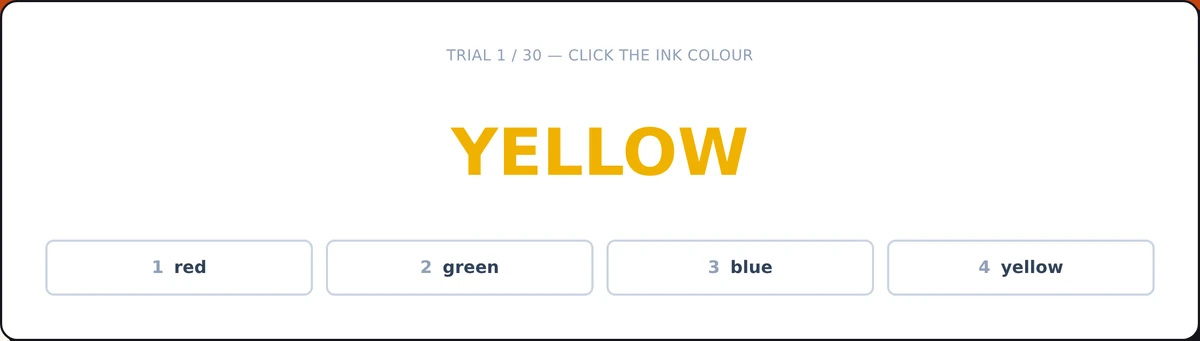
The first game showed me digits to remember. Fine. Then a grid of blocks started lighting up and I spent the first third of the timer working out what it wanted from me. Then came a screen where the word GREEN was printed in blue ink and I confidently clicked "green" several times before the penny dropped. By the time the arrows game appeared, I was rattled, clicking fast to compensate, and fast meant wrong.
Nothing in that battery was beyond me. I failed the format: rule-decoding on the clock, panic pacing after mistakes, and a brain running on six hours of sleep at midnight. I found out later this is the most common failure profile there is — the games are adaptive, they compare you against other applicants, and the applicants who have seen the format before start with a rank advantage that has nothing to do with raw ability.
What I did differently the second time
When the next invite arrived, I treated it like the interview it actually is.
Day 1 — I played everything once. I found free versions of the game types — digit span, Numerosity, the Stroop test, the flanker arrows, mental rotation, all of it — and did one pass with no ambition beyond never being surprised again. Rules I already knew felt like a superpower compared to attempt one.
Days 2–3 — I trained my two worst games. My percentiles made it obvious: memory span, mediocre; Stroop, embarrassing. So I read the technique guides (chunking digits phone-number style; for Stroop, responding to ink and letting the word blur) and did short sessions applying one technique at a time. Fifteen minutes a day, not marathons. Both percentiles moved within days — these skills are much more trainable than I expected.
The night before — I did nothing. No cramming. There are no facts in these tests; there is only a rested or unrested brain. I slept eight hours, and I am convinced this single decision was worth more than any practice session.
The day of — I controlled everything I could. Late morning slot, quiet room, laptop on power, real mouse, notifications off, coffee timed forty minutes before. Then a ten-minute warm-up on the easy games so my first real rounds were not my first rounds of the day. When the assessment started, every game was one I had already played. I ended most of them at my limit — that stretched feeling is how adaptive games work — but this time it did not read as failing. It read as the test doing its job.
Two weeks later: next round. Eventually: the offer.
The checklist I would give my past self
- Open the invite the day it arrives and book your best time slot inside the window — not deadline midnight with the rest of the panicked pool.
- Play every game type before the real thing. They are free. Attempt one should never be the scored one.
- Find your two weakest games and train those, with a technique, not blind reps.
- Protect your sleep like it is part of the assessment. It is.
- Warm up for ten minutes immediately before, on games you find easy.
- Expect to feel stretched at the end of every game. That is the design, not your verdict.
If your invite just landed and the clock is already short, the 24-hour prep plan compresses all of this into one day, and the complete guide explains the whole battery game by game. However much time you have: take the free baseline run first. Mine told me exactly where the next offer was hiding.
FAQ
Did practice actually change the result? Between a cold midnight attempt and a prepared one, yes. Across our own players who repeated a game at least three times, the median gain from first run to best is between 10 and 30 percentiles depending on the game.
How long before the assessment should I practise? Two or three short sessions across a few days beats one long night. The gain comes from familiarity with the mechanics, and that settles with sleep in between.
Does the same advice apply to trait games? No. Nothing in this account applies to the risk and reward games — those read disposition, and playing them as somebody else makes your profile inconsistent.