Arctic Shores Balloon Game: What It Measures & How to Practice
The Arctic Shores balloon game is a risk-and-reward task — 45 balloons, $0.05 a pump, exchange before it pops. Here is what it actually measures, why you should not try to "beat" it, and the free practice that helps you show up calm and focused.
TL;DR: The Arctic Shores balloon game is a behavioural task candidates describe as inflating a balloon to bank points, with each pump adding reward but raising the chance it bursts. It reads your risk appetite and self-control, not knowledge — so there is no score to grind for. You cannot practise the trait it reads, and you should not try to fake one. What you can do is see the format once, so it is not new on the day: our free balloon game follows the same inflate-and-exchange format.
What is the Arctic Shores balloon game?
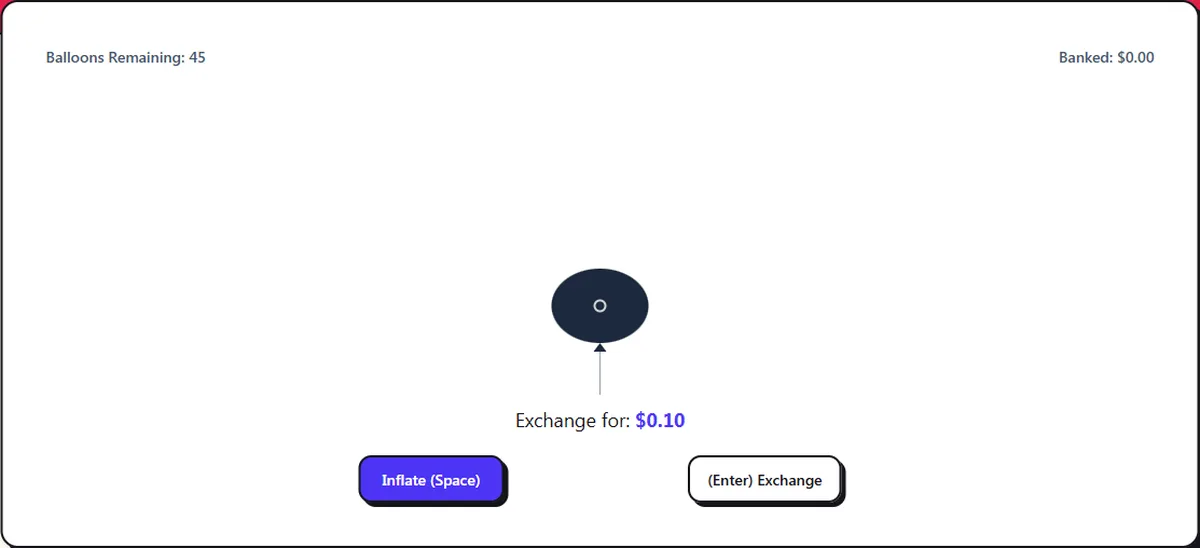
Arctic Shores' own promotional footage shows the real screen: "Balloons Remaining: 45" at the start and a "Banked" total in dollars, an Inflate (Space) button and an Exchange (Enter) button. Each pump adds $0.05 to the balloon's value, shown as "Exchange for"; exchange to bank it, or keep inflating and risk a pop, which loses that balloon's money but nothing already banked. The balloons are not all alike: the footage shows them in different shapes, and candidates describe three shapes — round, wider than tall, taller than wide — that pop at different rates. There is no time limit. The underlying choice never changes: keep going for more reward, or lock in what you have.
This is a behavioural task, not a puzzle. It is a long-standing psychology paradigm used to read risk appetite, impulse control, and how you calibrate reward against loss. Arctic Shores watches the pattern of your choices across many balloons — how bold you are early, whether you learn, whether you stay steady.
Important honesty note: Arctic Shores does not publish its exact rules, and the games in any given assessment change over time. Treat your invitation and its practice screens as the source of truth, not any description online — including this one.
Can you practise for it?
Not in the way people hope, and it matters to say so plainly. The balloon game measures a trait, not a skill. There is no "right" number of pumps, no answer key, and no hidden trick that scores higher. It is designed so that trying to game it tends to backfire — erratic, strategy-switching play reads as noise, and an unnaturally cautious or reckless profile can look inconsistent against the rest of your assessment.
The genuinely useful move is to play naturally and consistently. Pick a comfortable level of risk and hold it. Employers are matching your profile to a role, and a steady, honest profile serves you better than a performance you cannot sustain in the job.
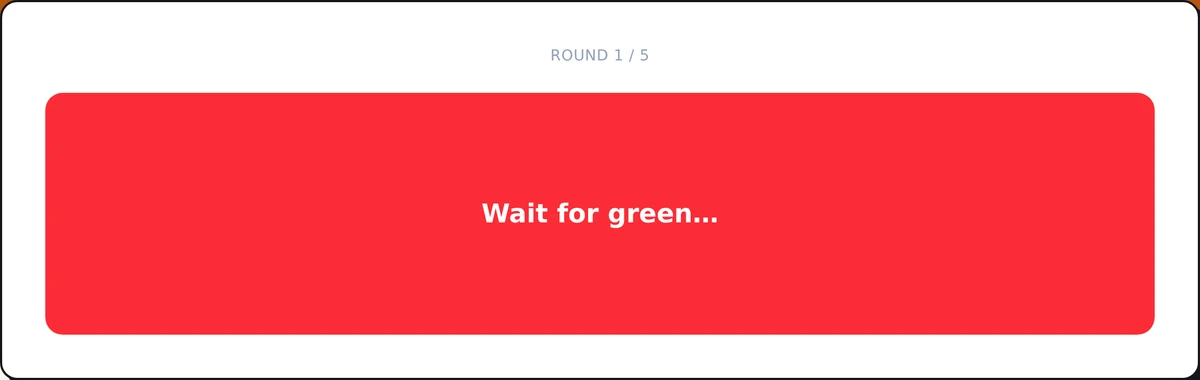
Where practice does help is familiarity and the state you play in. Playing the balloon game once removes the surprise of the format; our version has the same 45 balloons, $0.05 a pump and three shapes, and scores money banked, which rewards noticing that some shapes pop much earlier than others — but treat that as getting to know the task, not as rehearsing a profile. Calm, unhurried focus is trainable too. Short sessions on the reaction time test get you used to responding without panic, and the flanker arrows test builds the habit of staying composed while stimuli pull at your attention — the same steadiness that keeps a behavioural task clean.
How do you prepare for the balloon game?
- Do not rehearse a "strategy." Decide beforehand only that you will react honestly and keep your approach consistent across every balloon.
- Warm up your focus, not your answers. A few minutes on the reaction time test and flanker arrows test settles nerves so you are not making risk calls while flustered.
- Read every tutorial screen slowly. Similar-looking tasks differ in subtle rules; the intro tells you exactly how your version banks points.
- Set up your environment: charged device, quiet room, no app-switching. Behavioural tasks read consistency, and interruptions create the wild swings you want to avoid.
What else is in the Arctic Shores assessment?
The balloon task rarely stands alone. Most candidates meet a mix of cognitive and behavioural tasks — see the full Arctic Shores assessment guide for the range and how scoring works, and the complete guide to game-based hiring assessments for how these fit the wider landscape.
If your invite also mentions a scales puzzle, the Arctic Shores balance game guide covers what candidates report there, with a free balance game to practise on.
FAQ
Can I get a higher score on the Arctic Shores balloon game? There is no "higher score" to chase — it measures risk appetite, not correctness. Aim to be consistent and honest, not maximal.
Should I be cautious or bold? Neither on purpose. Play the way you naturally would; a forced style can clash with the rest of your behavioural profile.
Does practice help at all? It removes the surprise: one run of our balloon game means the format is familiar. It will not change your risk appetite, and it should not. Practising general focus and calm response (reaction and flanker tasks) helps you play steadily, which is the real goal.
GamePrep is an independent practice platform and is not affiliated with Arctic Shores. Arctic Shores does not publish its game rules and its assessments change — verify everything against your invitation. We provide related practice only — no leaked questions or answers.