Psychometric Test Practice: How to Prepare for Aptitude and Cognitive Ability Tests
Psychometric test practice for aptitude and cognitive ability tests. What's trainable, what isn't, and the free games that sharpen the speed and attention these tests actually measure.
Psychometric tests measure aptitude — reasoning speed, attention, memory and problem-solving — under time pressure, usually as a standardised score or percentile against other candidates. You can't memorise your way through a well-built one, but the parts that depend on speed, attention control and familiarity respond well to practice. Knowing which parts those are is half the battle, and it's what most candidates get wrong.
What a psychometric test actually measures
"Psychometric" is an umbrella. Under it sit several families, and they behave differently when you try to prepare:
- Cognitive / aptitude ability — numerical, verbal and logical reasoning, plus speed-and-accuracy tasks. This is the trainable-on-the-margins core.
- Attention and processing speed — how fast and consistently you respond, and how well you ignore distraction. Highly practice-sensitive.
- Personality and behavioural questionnaires — the "situational" and trait parts. These aren't skill tests; there's no right answer to drill, and you shouldn't try to game them.
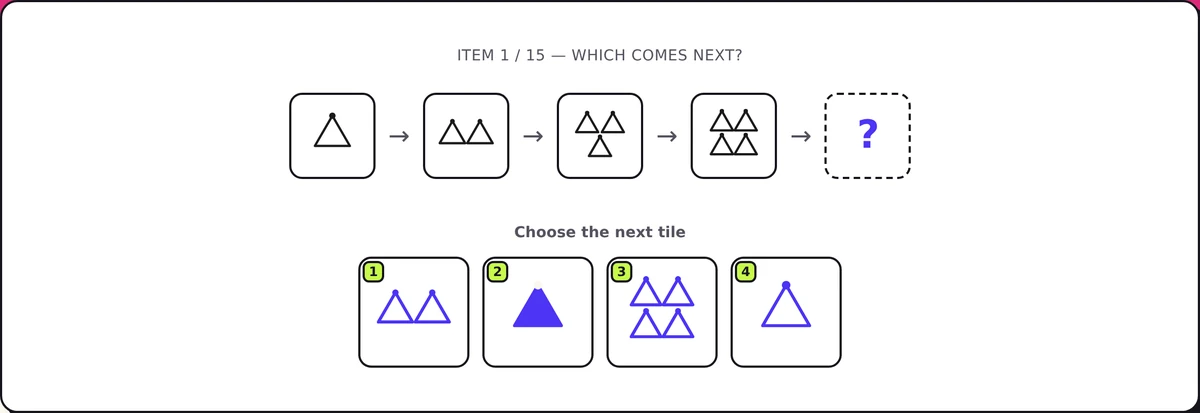
Being candid about the boundary matters. GamePrep trains the cognitive-speed and attention side with playable games — reaction time, mental arithmetic, number sense, distractor resistance. It is not a verbal-reasoning question bank, a full numerical data-interpretation set, or a personality-questionnaire coach. If your assessment is heavy on reading-comprehension logic or long data tables, pair this with a dedicated question bank for that content. What we sharpen is the underlying engine: how fast, accurate and focused you are when the clock is running.
The skills you can train here (free)
Processing speed — Reaction Time. You respond the instant a target appears. It's the purest measure of raw processing speed and the foundation under every timed section — a slow, jittery baseline drags down everything else. Quick to play, and warming it up genuinely helps on the day.
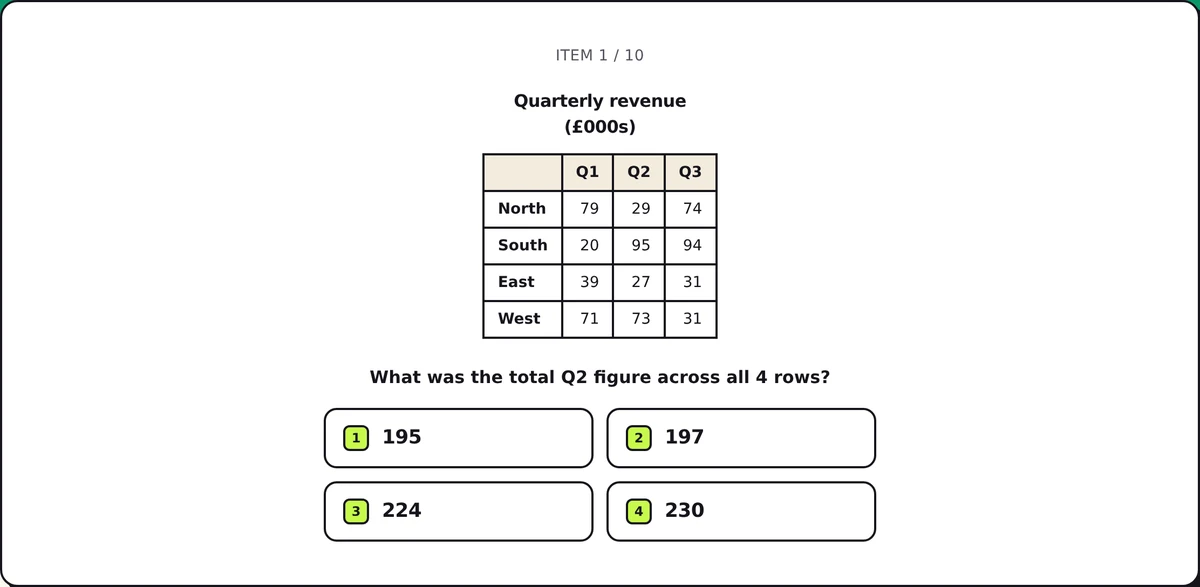
Numerical fluency — Mental Math. Rapid arithmetic against a timer, mirroring the fast-numerical parts of aptitude batteries. The highest-value drill for anyone whose test includes a numerical section, because it rebuilds instant number-fact retrieval.
Number sense — Numerosity. Scanning for digit pairs that hit a target trains "endings-first" checking and quick magnitude judgement — the estimation instinct that catches errors before you commit them.
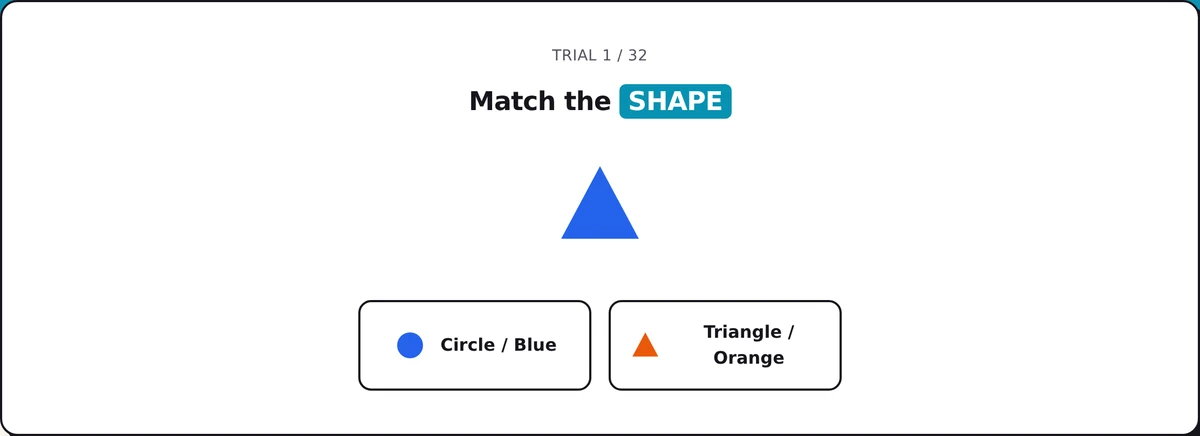
Attention and distractor resistance — Flanker (Arrows). You respond to a central arrow while flanking arrows try to mislead you. This trains selective attention and inhibition — filtering noise to act on the signal — which underpins accuracy on any busy, time-pressured screen.
How to improve
- Build a fast, steady baseline first. Warm up reaction time before anything else. A cold, distracted start costs consistency, and consistency is often scored as heavily as raw speed.
- Find your no-error pace. On timed sections, sprinting produces error clusters that adaptive tests punish hard. Settle at the rhythm where you're almost never wrong and hold it — accuracy usually outweighs a slightly faster wrong answer.
- Drill the cheap points. Rusty times tables and slow percentage maths are pure, recoverable loss. Ten minutes of retrieval practice buys back speed you already "know."
- Train focus, not just speed. On distractor-heavy tasks, resist the reflex to react to the loudest thing on screen. The Flanker game makes that inhibition automatic.
- Sleep and warm-up beat cramming. Processing speed and attention degrade fast on poor sleep. A rested brain plus a short warm-up outperforms a tired brain that studied all night.
- Read every instruction slowly, then go fast. The most avoidable losses come from misreading what a section asks — respond-to-target versus respond-to-non-target, ascending versus descending. Spend the setup seconds getting the rule exactly right, then let your trained speed take over. A fast answer to the wrong question scores zero.
As a rough anchor, simple visual reaction times cluster around a quarter-second and strong candidates clear fast-arithmetic items in a few seconds each — but treat any single figure loosely, because norms vary by test. Your own baseline and how it moves with practice is the number that matters.
Where this shows up
Aptitude and cognitive-ability tests appear across nearly every graduate and early-career process. For named examples, see the SHL game assessment guide, the Cut-e / Aon assessment guide and the pymetrics games complete guide. For deeper drills on specific skills, the mental math speed guide and the n-back test explained go further. To see how these tasks fit into a full game-based battery, start with the complete HireVue game-based assessments guide. The employers page lists which companies and vendors use them.
FAQ
Can you practise for a psychometric test, or is that pointless? You can practise the speed, attention and familiarity components — those improve. You can't "learn the answers" to a well-built reasoning test, and personality questionnaires aren't skill tests to drill at all.
Which game should I start with? Reaction Time to set a fast, steady baseline, then Mental Math if your test has a numerical section. The Flanker game builds the focus that supports both.
Does this replace a full aptitude question bank? No. GamePrep trains the cognitive-speed and attention layer with games. For verbal reasoning and long data-interpretation questions, add a dedicated question set.
How should I approach the personality section? Answer honestly and consistently. There's no "correct" profile to fake, and inconsistency is more likely to flag than help. This is one part we deliberately don't try to coach.
Do you have the real test questions? No. We offer practice in the same skill formats only — never leaked questions, answers, or guaranteed passes. The gain is readiness.
GamePrep is an independent practice platform, not affiliated with any assessment vendor. We provide practice only — no leaked questions or answers.