McKinsey Ecosystem Building Game: How It Works & How to Practice
The McKinsey Ecosystem Building game asks you to assemble a viable food chain from species that satisfy location, calorie, and relationship rules. Here is what candidates report, what it really measures, and how to train the planning and logic behind it for free.
TL;DR: The McKinsey Ecosystem Building game is the most famous task in the McKinsey Solve assessment (formerly Imbellus). You pick a set of species that survive together in one location, satisfying calorie needs and predator-prey relationships. It measures systems thinking and logic under constraints — and Solve records how you work, not just your final answer. You cannot rehearse the exact game, but the underlying planning and rule-following are very trainable.
What the Ecosystem Building game is
In the task candidates most often describe, you are shown a location — a mountain, a coral reef, or another habitat — and a large menu of plants and animals, each with data attached. Your job is to build a food chain that stays alive: choose species that belong in the chosen terrain, feed each other in a workable predator-prey structure, and collectively balance out on calories so nothing starves.
People search for this game under several nicknames — the "coral reef" scenario, the "mountain" version — because the habitat and the artwork change between sittings. Candidates also mention individual species from the menu, which is why searches for things like the "armadillo" or "habitat protection" game land here: those are creatures and terrain inside this same build-a-food-chain task, not separate assessments.
Sea Wolf is a different game, despite what a lot of older write-ups say. Earlier guides (including an earlier version of this page) treated "sea wolf" as another nickname for the ecosystem scenario. That is no longer accurate: candidates in 2026 report Sea Wolf as its own module, a constraint-and-optimisation task sitting after Redrock. See the Sea Wolf game guide.
Is this game still in the assessment?
Increasingly, no — and this is the part worth knowing before you spend a week on it.
From around mid-2025 McKinsey began phasing Ecosystem Building out. Candidates sitting Solve in 2026 most commonly report Redrock and Sea Wolf, with a Sustainable Futures Lab module on longer invitations. A 65-minute invite usually means two modules; 85 minutes often means three.
So treat this page as background rather than your main preparation. It is still worth reading if your invitation names it, if you are sitting an older regional variant, or because the reasoning it trains — constraints, dependencies, checking before committing — is exactly what the current modules also reward. But if you only have a few days, spend them on the Redrock study and Sea Wolf.
McKinsey does not publish its rules and refreshes the game set regularly. Your official invitation and its built-in tutorial are the source of truth, not any single account online — including this one.
What it actually measures
Strip away the wildlife and this is a constraint-satisfaction puzzle. You are holding several rules in your head at once — location fit, calorie thresholds, who eats whom — and searching for a combination where all of them are true together. That is systems thinking (seeing how one choice ripples into others) plus disciplined logic under constraints.
The part candidates underrate is that Solve captures process data. It logs how you explore the options, whether you check the rules before committing, how you revise after a mistake, and how methodical your search is. Two people can reach a similar answer and score differently because one worked systematically and one guessed. That is also why chasing "the answer" misses the point — the assessment is partly grading your approach.
How to practise the skills (free)
You cannot download the real Ecosystem game, and you should not want to. What you can train are the two habits it leans on: methodical planning and rule-based logic.
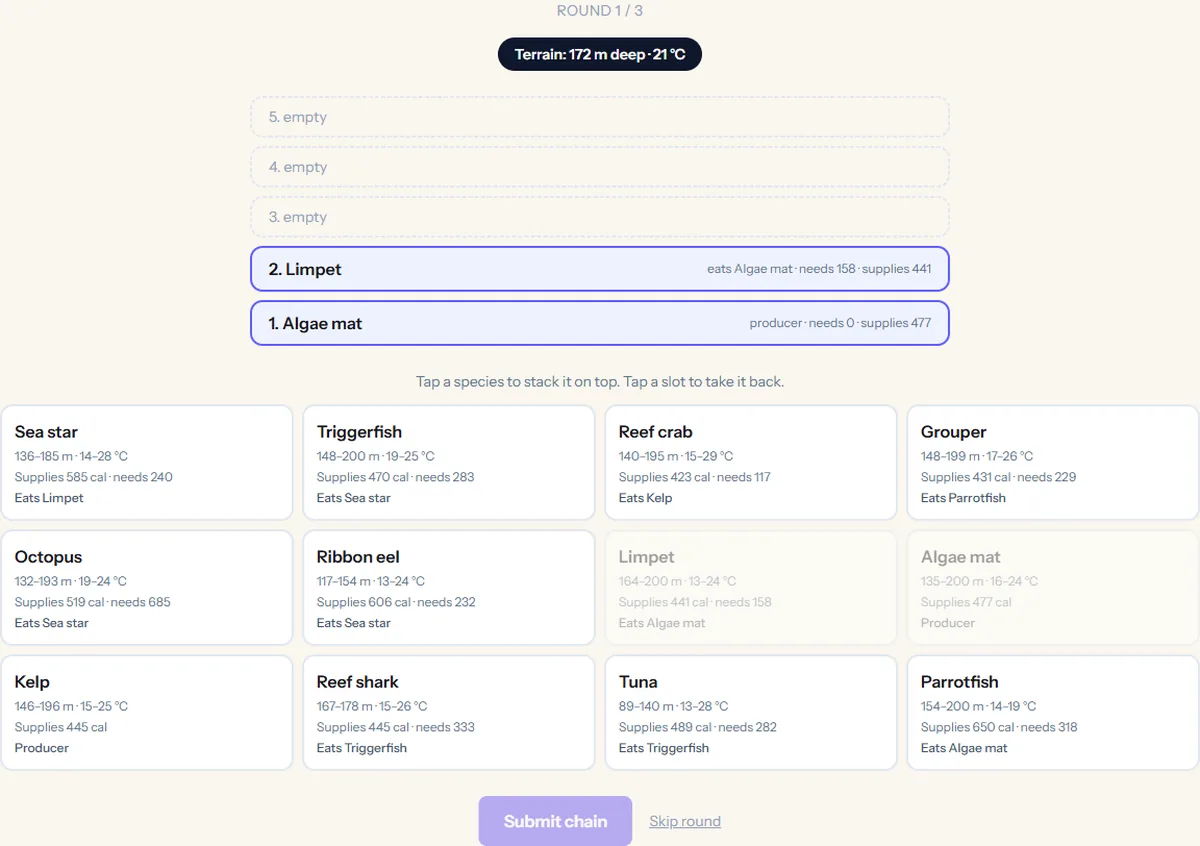
Start with the ecosystem building trainer. It runs the same shape of task: a terrain with conditions, a pool of species with tolerances and calorie values, and a chain you have to assemble so that every link survives the terrain, eats the species directly below it, and is fed by it. Each link that holds scores, so a chain that breaks at the fourth species tells you exactly where your checking slipped.
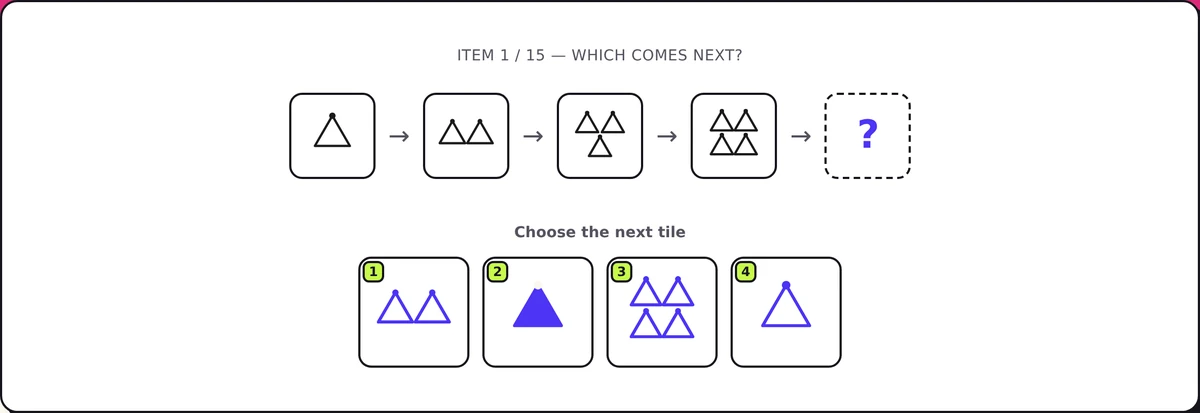
Then use the pathfinder puzzle for the planning habit in a different costume — plan the route before you touch anything — and inductive reasoning to sharpen how you infer and apply a rule from what you are shown.
None of these is a replica of the McKinsey game, and the species you will be shown are not ours to know. The transfer is in the working style: read the constraints, eliminate what they rule out, build a candidate, verify it against every rule before committing.
The rest of McKinsey Solve
The Ecosystem game is one module in a larger battery. The McKinsey Solve game guide walks through the full assessment and how it is scored, and the complete guide to game-based hiring assessments places McKinsey alongside HireVue, pymetrics, and Arctic Shores so you can see the wider landscape.
If your invite also mentions a defense scenario, the McKinsey Plant Defense game guide covers that planning-under-pressure task.
FAQ
Is the "sea wolf" game the same as the Ecosystem Building game? No. That was a common belief in older write-ups, and this page used to repeat it. Candidates in 2026 describe Sea Wolf as a separate module — a constraint-and-optimisation task that unlocks after Redrock — rather than another habitat for the food-chain puzzle. "Coral reef" and "mountain" genuinely are just different terrains within this game; Sea Wolf is not. See the Sea Wolf guide.
What is the "armadillo" or "habitat protection" game? Those are not separate assessments — armadillos are one of the animals in the species menu, and habitat protection describes what the food-chain task is asking you to achieve. If your search led you here for either, you are in the right place.
Is Ecosystem Building still part of McKinsey Solve? Decreasingly. McKinsey began phasing it out around mid-2025, and 2026 candidates most often report Redrock and Sea Wolf instead, with Sustainable Futures Lab on longer invitations. Check your invitation before making this your main preparation.
Can I get the answers to the Ecosystem game? No, and they would not help. The species menus and correct combinations change between sittings, and Solve grades your process as well as your result — so a memorised answer, even a real one, cannot fake the methodical working the tool is watching for.
How much does speed matter? Working steadily and checking the rules beats rushing. A clean, systematic solution reads better than a fast, sloppy one that violates a constraint.
Do I need biology knowledge? No. Everything you need — calories, habitat, who eats whom — is given in the task. It is a logic puzzle dressed as an ecosystem.
GamePrep is an independent practice platform and is not affiliated with McKinsey & Company. McKinsey does not publish its game rules and the Solve assessment changes — verify everything against your invitation. We provide related skills practice only — no leaked questions or answers.