Arctic Shores Ticket Game: How the Number & Shape Task Works & How to Practice
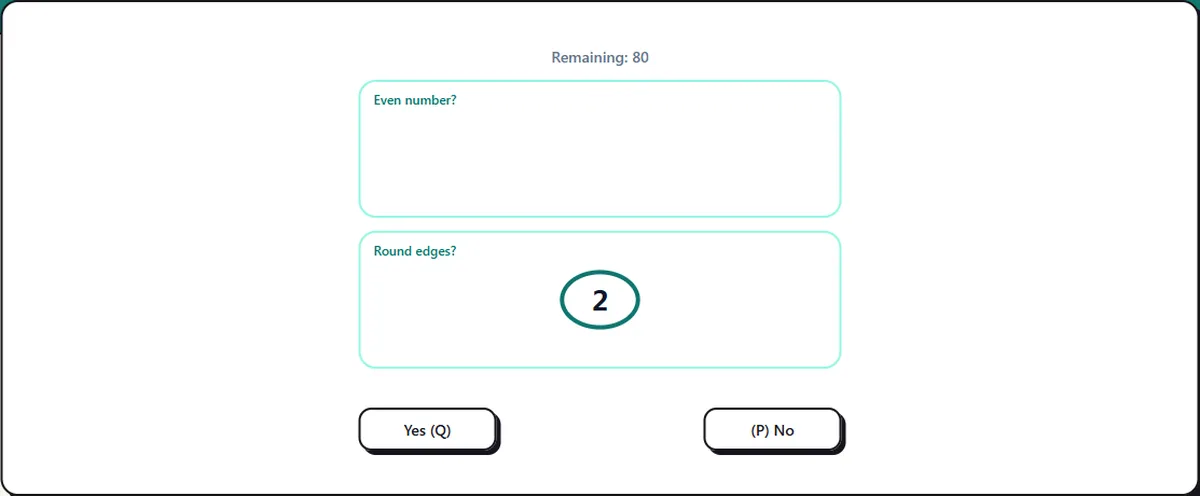
The Arctic Shores ticket game shows a shape with a number in one of two boxes — top box, is the number even; bottom box, does the shape have round edges — Yes or No on Q and P, fast. How it works and a free practice version.
TL;DR: The Arctic Shores ticket game is a task-switching test. Two boxes sit one above the other, and each round a "ticket" — a shape with a digit inside — appears in one of them. In the top box you answer about the number (is it even?); in the bottom box you answer about the shape (does it have round edges?). Yes or No on Q and P, about eighty quick rounds. The skill is switching rules the instant the ticket changes box. Play the free ticket game.
What is the Arctic Shores ticket game?
The task appears as "Ticket" on candidates' Arctic Shores task lists. A full screen recording of the real task from 2021 (the Skyrise City version), a candidate who sat it three times, and two prep simulations all show the same thing:
- The story: you hand out tickets to an event, and the shapes and numbers tell you who gets which.
- Two tickets, one above the other. Each round a shape with a single digit (0–9) in it appears on one of them.
- The box sets the question. Top ticket: "Is the number even?" Bottom ticket: "Does the shape have round edges?" — circles, blobs and trefoils are round; stars, triangles, bow-ties and jagged shapes are not.
- Yes on Q, No on P, with a counter of the tickets remaining from 80.
- Fast, with feedback. Each answer gets a green tick or a red cross; pressing before the ticket appears shows "too early", and missing the window — about a second near the end — shows "too late".
- The reminder goes. The question is printed next to the ticket in use at first; after about thirty tickets it disappears and you have to remember which box asks what.
An honesty note: the newer (2026) version of the task may look different, and the exact timings and scoring are not published. Your invitation and its tutorial screens are the source of truth.
What does the ticket game measure?
Mostly cognitive flexibility and processing speed: how quickly you drop one rule and pick up the other, and how steady your speed is. A candidate's Arctic Shores feedback report shows scales like "processes information quickly" and "consistent speed", and one about bouncing back from setbacks — the kind of things a fast, error-prone task like this can read.
The cost everyone pays is the switch cost: rounds where the ticket has just moved to the other box are slower and more error-prone than rounds where it stays. Practice makes it smaller.
How do you get better at it?
- Let the box decide the question first. Before you read the ticket, note where it is — top means number, bottom means shape — then look.
- Fingers resting on Q and P. Speed should come from deciding, not from moving your hands.
- Learn the rules before the reminders go. When the labels fade, you should already be answering without them.
- Don't guess early. An answer before the ticket is up is an error even when it happens to be right.
- Recover in one round. A mistake costs that round only; dwelling on it costs the next ones.
How do you practise for it?
- Play the ticket game. Eighty rounds, half in each box in random order, Yes on Q and No on P, a window that shrinks from 1.5 to 0.9 seconds, a tick or a cross after each answer, and a reminder that disappears after about thirty tickets. The result shows accuracy, speed and your switch cost.
- Train the same switching skill with the task-switching test, the cut-e version where a written cue sets the rule.
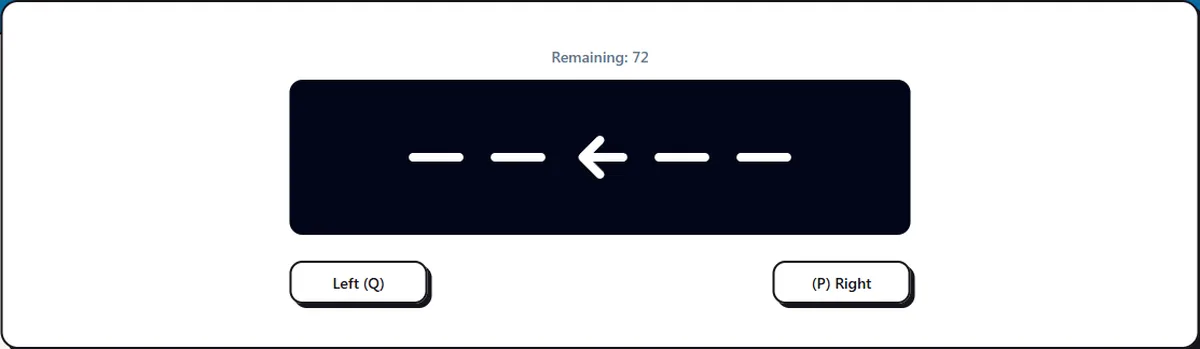
- Train fast, accurate keypresses on Q and P with the direction game.
What else is in the Arctic Shores assessment?
Ticket is usually one of several tasks. The Arctic Shores assessment guide covers the full set and how the benchmark works; the direction, predict, lock and balance guides cover the other tasks candidates describe.
FAQ
What is the Arctic Shores ticket game? A task-switching test: a shape with a number appears in a top or bottom box; in the top box you say whether the number is even, in the bottom box whether the shape has round edges, Yes or No on Q and P, over about eighty quick rounds.
Is it a maths test? No — "is it even?" is the only maths. The difficulty is switching between the two questions at speed.
Why am I slower on some rounds? Those are usually the rounds right after the ticket changes box — the switch cost. It is normal, and it shrinks with practice.
Is GamePrep's version the real one? No. Its rules follow a recording of the real task; its look and timings are our own.
GamePrep is an independent practice platform and is not affiliated with Arctic Shores. Arctic Shores does not publish its game rules; the mechanics above are as reported by candidates and prep providers, and assessments change — verify everything against your invitation. We provide practice only — no leaked questions or answers.