Pymetrics Cards Game
How the Four Decks Work and How to Play
The pymetrics cards game asks you to draw from four decks that win or lose money. It is a version of the Iowa Gambling Task and reads risk and learning, not right answers. How it works, what it measures and how to play it honestly.
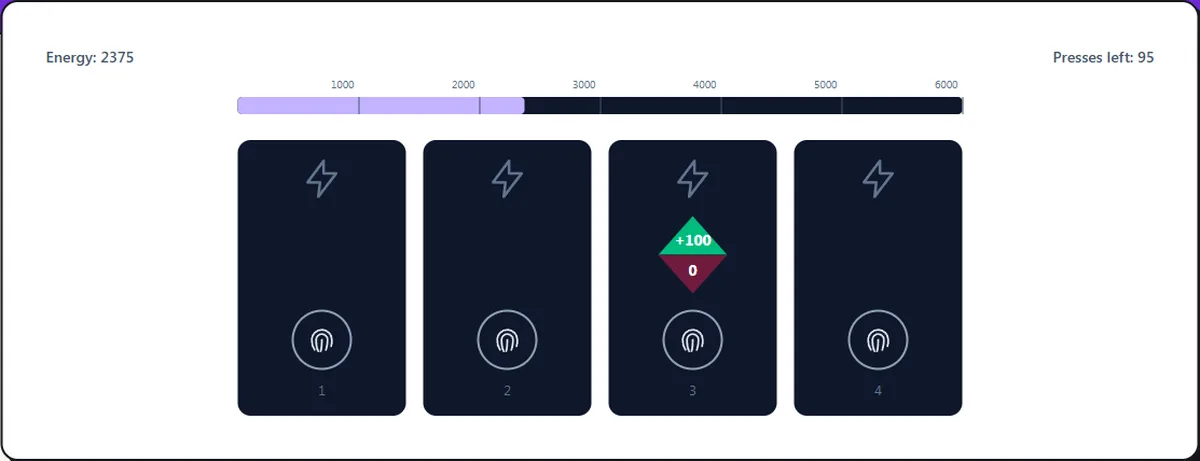
In the pymetrics cards game you draw cards one at a time from four decks; each card wins or loses money, and you only find out which after you draw. Prep providers describe it as one of the 12 games in the pymetrics battery (now sold by Harver) and say it measures risk-taking and how quickly you learn from feedback (JobTestPrep). The design follows a well-known psychology task, the Iowa Gambling Task, in which some decks pay more per card but lose more over time. There is no official pass mark and no single "correct" deck pattern that pymetrics rewards: your choices feed a trait profile that is compared with the profile for the role. You can try the same four-deck logic free in our energy generator game.
How the cards game works
What prep providers report, since Harver publishes no rules for the individual games:
- Four decks on screen. You choose any deck for each draw, one card at a time (JobTestPrep).
- Every card wins or loses money. JobTestPrep's wording: "You will not know if a card grants or deducts money until after you draw it." Your balance updates as you go.
- A fixed number of draws. The game "will terminate after a predetermined number of card-drawing rounds"; JobTestPrep does not give the number, and neither does Harver.
- The decks behave differently. "Although it seems random at first, as you progress, you should start recognizing the underlying pattern" (JobTestPrep, free pymetrics games).
Harver describes the whole battery as "12+ interactive, gamified experiences" taking "approximately 25 minutes" (Harver), and pymetrics' help centre says each game lasts "only 1-3 minutes" and cannot be paused (pymetrics Support Center). For the rest of the battery, see the pymetrics games complete guide and the pymetrics practice hub.
The task behind it: the Iowa Gambling Task
The four-deck format comes from the Iowa Gambling Task, published by Antoine Bechara, Antonio Damasio, Hanna Damasio and Steven Anderson at the University of Iowa in 1994 (Wikipedia: Iowa gambling task). In the original:
- Two decks are "bad": they pay larger rewards per card but carry larger or more frequent penalties, so over many draws they lose money.
- Two decks are "good": smaller rewards and smaller penalties, so over many draws they come out ahead.
- Most healthy participants sample every deck and, "after about 40 or 50 selections", are fairly effective at identifying and sticking to the good decks.
This is the background, not a confirmed description of pymetrics' version. Harver does not publish the payoffs of its decks, and nothing guarantees they match the 1994 design. What the format does tell you is the shape of the problem: big wins and long-run value are not the same thing, and the only way to find out which deck is which is to draw from it and keep track.
What the cards game measures
The prep sites agree on two things:
- Risk tolerance. JobTestPrep: "This test measures two main competencies – risk and pattern recognition" (JobTestPrep). How much you keep drawing from decks that deliver occasional big losses says something about how much risk you accept for a larger payoff.
- Learning from feedback. How quickly you notice that a deck is paying off, or costing you, and shift your choices. JobTestPrep calls this "your ability to learn and recognize patterns" (JobTestPrep).
Harver's own list of the traits its games measure includes "Risk Tolerance", "Decision making" and "Learning" (Harver), which fits this game closely. Like the balloon game, the cards game is a trait game: the result is a description of your style, not a score out of 100.
Is there a right strategy?
Not in the sense of a right answer. JobTestPrep says plainly: "There is no preferred strategy for the Pymetrics Card Game", because roles differ in how much caution or boldness fits (JobTestPrep). pymetrics compares your trait profile with a profile built for the role, and if you apply to a second employer within the replay window, "your existing gameplay data will be re-assessed against the new role profile" (pymetrics Support Center). One set of choices gets read against several roles, so tuning your play to guess one employer's profile is a weak bet.
That said, the game does reward paying attention. Choosing at random tells the game nothing about how you learn. A sensible, honest way to play:
- Sample every deck early. Draw a few cards from each before you settle. JobTestPrep's note on strong candidates: "They start by testing each deck to get a sense of how it behaves, rather than relying on guesswork."
- Judge decks by their running total, not their best card. A deck that hands out big wins and the occasional much bigger loss can be the worst deck overall. Keep a rough sense of "up or down so far" for each.
- Shift when the evidence is clear, then stay consistent. Once a deck has cost you over a reasonable number of draws, move most of your draws elsewhere. Flipping back and forth after every result reads as noise.
- Do not chase a loss. One large penalty is part of the design. Abandoning a deck after a single bad card is as much a reaction as ignoring a run of them.
- Do not try to play a character. The games cross-check each other. Someone who plays recklessly here and very cautiously in the balloon game produces a profile that fits nobody. Play the way you would actually decide with real money at stake.
How to practise the cards game
pymetrics says "you cannot preview the games before playing" (pymetrics Support Center). You cannot train a trait, but one run of the format removes the surprise, which is the part that makes people click at random in the first minute.
Our energy generator game uses the same logic: four generators, each pull shows energy gained and sometimes energy lost, and some generators give more per pull but now and then lose a lot. It is built for the Arctic Shores Energy task, which is also an Iowa Gambling Task variant; the Arctic Shores energy game guide covers that version. Play it once or twice to feel what "learning the decks" is like, not to drill a pattern: the real decks will not pay out the same way.
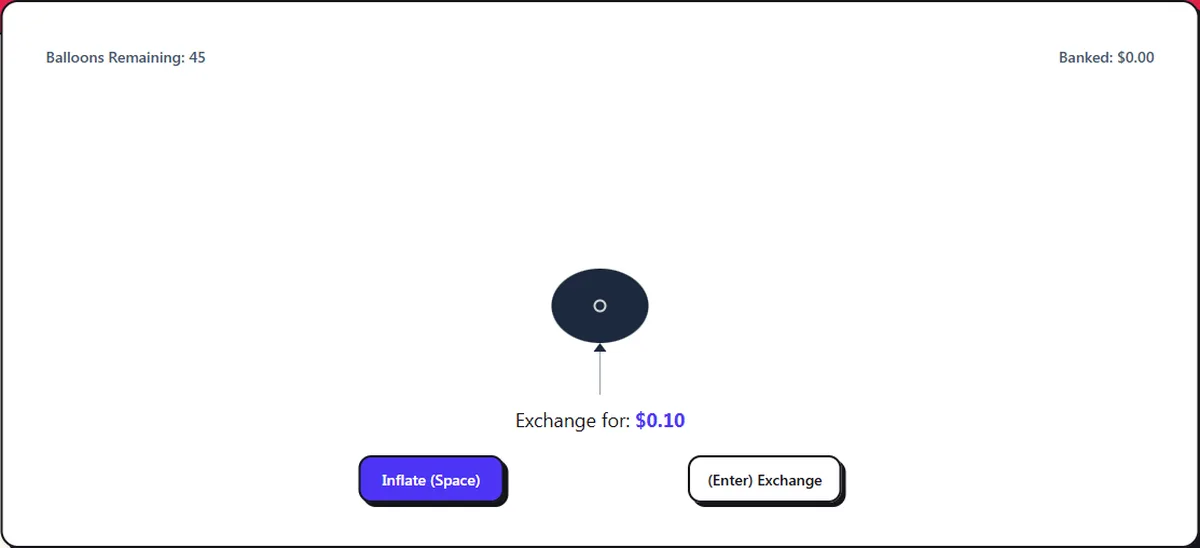
For the risk side, the balloon risk game practises the pymetrics balloon format. If you want to spend practice time where it changes your result, put it into the skill games of the battery: digit span for the digits game and the flanker arrows test for the arrows game.
FAQ
What is the pymetrics cards game? One of the pymetrics (Harver) games. You draw cards one at a time from four decks, each card wins or loses money, and you try to finish with as much as you can. Prep sites say it measures risk-taking and learning from feedback. It is based on the Iowa Gambling Task from 1994.
Which deck should I pick in the pymetrics card game? Nobody outside Harver knows how its decks are set up, so no guide can tell you a deck. In the original Iowa Gambling Task, the decks with the biggest wins also had the biggest losses and lost money over time. Sample every deck, track whether each is up or down overall, and favour the ones that are up.
Is there a right answer in the cards game? No. It is a trait game: your choices describe how you handle risk and feedback, and that profile is compared with the profile for the role. JobTestPrep says there is no preferred strategy, because some roles fit a cautious style and others a bolder one.
What is a good score on the pymetrics cards game? pymetrics publishes no score or pass mark for any game. JobTestPrep estimates the highest possible balance at "around 6000" from its own research, which is an unofficial figure. The money total is not what you are measured on; your pattern of choices is.
Can I practise the pymetrics cards game? Not the real game, which cannot be previewed. Our free energy generator game uses the same four-deck logic, so you can see the format once before your assessment.
GamePrep is an independent practice platform and is not affiliated with pymetrics, Harver, Arctic Shores or any employer. Our games are practice versions written for GamePrep, not the real assessments, and we provide no leaked questions or answers.