Pymetrics Digits Game
Rules, What a Good Score Looks Like and How to Practise
The pymetrics digits game flashes a sequence of digits and you type it back in order; each correct answer adds a digit. It measures short-term memory span. Rules, a realistic target and free practice.
The pymetrics digits game flashes a sequence of digits one at a time and asks you to type it back in the same order; each correct answer makes the next sequence one digit longer. Prep providers report that it starts at four digits, drops a digit after a mistake, and ends after three wrong answers (JobTestPrep, Game Assessment Prep). It is a digit span task, one of the oldest standard tests of short-term memory, and one of the pymetrics games that respond most clearly to practice. A realistic first-try target is five to seven digits: among 422 players' first attempts on our free digit span test (July to November 2026), the median was 6 digits and the middle half recalled 5 to 7.
What is the pymetrics digits game?
Harver does not publish the rules. Prep providers describe them like this:
- A sequence of digits appears one at a time in the centre of the screen. Game Assessment Prep estimates about 900 milliseconds per digit (Game Assessment Prep, updated 15 July 2026).
- When the sequence ends, you type it back in the same order. JobTestPrep's description is "a sequence of flashing digits, which you will then need to repeat in the correct order" (JobTestPrep).
- JobTestPrep says "The first sequence contains 4 digits". Then: "If you repeat the sequence correctly, it will increase by one. If you repeat it incorrectly, it will decrease by one."
- The game ends after three mistakes. JobTestPrep says it "will terminate after 3 wrong answers"; Game Assessment Prep describes three consecutive errors, with the count reset after a correct answer. The two prep sites disagree on that detail, so do not count on spare lives.
Is there a backward round? Game Assessment Prep says "Forward-only recall is the best-supported default" and calls reverse recall a common misconception. Prep sites do describe backward rounds in HireVue's digit span game (GameTestPrep), which may be where the confusion comes from (see our backward digit span guide). Practising backward span is still useful, as it trains the same memory harder.
The digits game sits inside the wider battery, which Harver describes as "12+ interactive, gamified experiences" that take "approximately 25 minutes" on average (Harver). pymetrics' help centre says each game lasts "only 1-3 minutes" and cannot be paused (pymetrics Support Center).
What does the digits game measure?
The core measure is memory span: how many items in order you can hold in mind for a few seconds and reproduce. Game Assessment Prep calls it "short-term working-memory span: how much ordered information you can hold and reproduce", and both prep sites stress that order matters: the right digits in the wrong order count as a mistake.
Harver's public list of the traits its games assess (effort, risk tolerance, decision making, attention, focus, learning and others) does not name memory as such (Harver). The digits game feeds those broader traits rather than a "memory score". JobTestPrep also describes a style measure layered on top, "Methodical vs. Biased to Action": whether you take your time to avoid errors or answer quickly. That is their interpretation, not a Harver statement.
The classic benchmark comes from George Miller's 1956 paper, "The magical number seven, plus or minus two" (Miller, 1956). Most adults recall somewhere between five and nine digits forwards.
What is a good score on the pymetrics digits game?
pymetrics does not publish norms or a cut-off. Game Assessment Prep says plainly: "There is no public pymetrics cutoff." Employers compare your overall trait profile with a profile built for the role, not your span with a pass mark. Here is what the numbers we can see look like:
Our data. Among 422 players' first attempts on our digit span test (July to November 2026):
- The median first attempt was 6 digits.
- The middle half recalled 5 to 7 digits.
- The top tenth recalled 8 or more.
- At least one in ten first attempts scored 0, with no sequence completed.
Among the 92 players who came back for at least three runs, the median gain from the first run to the third was one digit. Those are self-selected players who chose to return, so read it as a rough guide, not a promise.
On our backward digit span test, where you type the sequence in reverse, the median of 207 players' first attempts was also 6 digits, with the middle half between 4 and 7 and the top tenth at 8 or more.
Their data. JobTestPrep reports that on its own pymetrics-style simulation (about 1,000 test-takers) the average player "memorizes a maximum of 8-9 digits" and the top 20% reach "around 11 digits". Its rules differ from ours: a mistake there drops you one digit and lets you continue, while ours ends the run after two misses at the same length. The two sets of numbers are not comparable, and neither is a pymetrics norm.
For a fuller picture, see what is a good digit span score, our score benchmarks and the cognitive test statistics study, which sets digit span next to the other memory tests. These are people practising, not pymetrics candidates.
How to improve on the digits game
Digit span responds to technique more than to raw effort. What helps:
- Chunk the digits. Group them in twos or threes as they appear: 7-4-1-9-2-6 becomes 74, 19, 26. Phone numbers work the same way. Chunking is the standard technique for holding more.
- Rehearse silently as the sequence grows. Say the chunks to yourself in a steady rhythm while new digits arrive, rather than trying to "see" the whole string at the end.
- Keep a rhythm. A regular inner beat keeps the order straight, and order is half the task: the right digits in the wrong order count as a mistake.
- Replay before you type. When the sequence ends, run through it once in your head, then type it in one go.
- Stop practising when you are tired. Span drops with fatigue. Short sessions over several days beat one long session.
For more training ideas, see how to improve working memory for assessments.
How to practise the digits game
pymetrics' help centre says "you cannot preview the games before playing" (pymetrics Support Center). You can still practise the task itself:
- Digit span: the forward version. Digits appear one at a time, each correct answer adds a digit, and two misses at the same length end the run. Your score is the longest sequence you got fully right.
- Backward digit span: the same task in reverse. Once forward span feels easy, this trains the same memory under more load.
- N-back and Corsi blocks: other working-memory tasks, useful if your invitation includes pymetrics' extra games or HireVue's memory games.
A simple plan: two or three digit span runs a day for five days, using chunking from the first run, then one backward run each day. Track your longest span, not your average.
Where the digits game sits in the pymetrics battery
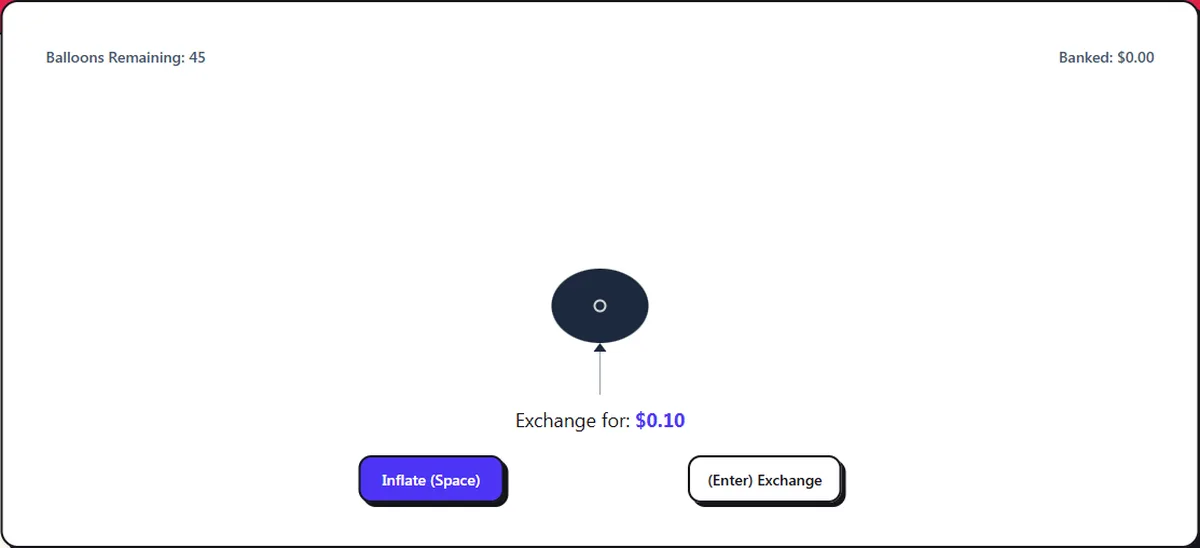
The digits game is the clearest skill game in the battery. The arrows game and the stop game also reward practice, and the tower game rewards a planning habit. Trait games such as the balloon game have no right answer. The complete pymetrics games guide covers all twelve, and Harver vs pymetrics explains why your invitation may name either company.
FAQ
How does the pymetrics digits game work? Digits flash one at a time and you type them back in order. Prep providers report that it starts at four digits, adds one after a correct answer, drops one after a mistake, and ends after three mistakes.
Is the pymetrics digits game forward or backward? Prep providers report forward recall only. Backward recall is part of HireVue's digit span game, not pymetrics', as far as prep sites can tell.
What is a good score on the pymetrics digits game? pymetrics publishes no cut-off. As a reference, the median first attempt on our forward digit span test was 6 digits among 422 players, the middle half reached 5 to 7, and 8 or more put a first attempt in the top tenth.
Can you improve your digit span? Yes, more than most pymetrics games. Among players who returned for a third run on our digit span test, the median gain was one digit from the first run, and chunking is the main technique.
How many mistakes are allowed? Prep sites report the game ends after three wrong answers. They disagree on whether those must be in a row, so treat every answer as if it counts.
Can I retake the digits game? Not freely. pymetrics allows candidates "to play the games once every 330 days", and within that window your existing results are re-assessed for each new role (pymetrics Support Center).
Are there accommodations for the digits game? pymetrics offers gameplay accommodations for ADHD, dyslexia and colour blindness, chosen in a "Game Configuration" pop-up before you start (pymetrics Support Center).
GamePrep is an independent practice platform and is not affiliated with pymetrics or Harver. Game sets vary by employer and change between cycles; treat your invitation and its instructions as the source of truth. We provide related practice only, never leaked questions or answers.