McKinsey Sea Wolf Game: What It Is and How to Practice (2026)
Sea Wolf is the constraint-and-optimisation module in McKinsey Solve, unlocked after Redrock — and it is not the ecosystem game, despite what older guides say. What candidates report, what it measures, and free practice for the reasoning behind it.
TL;DR: Sea Wolf is a constraint-solving and optimisation task in McKinsey Solve. It sits after Redrock — you have to finish Redrock before it opens — and it is a separate game from Ecosystem Building, which a lot of older guides get wrong. You cannot rehearse the scenario, but the reasoning it rewards (work the constraints before you commit, then optimise inside them) is trainable.
Where it sits in Solve
Candidates in 2026 most commonly describe this shape:
- Redrock Study — research and data interpretation. Comes first and gates the rest.
- Sea Wolf — constraint-solving and optimisation. Unlocks once Redrock is done.
- Sustainable Futures Lab — judgement and prioritisation under ambiguity, reported on longer invitations.
The length of your invitation is the clearest signal of what you are getting: roughly 65 minutes usually means two modules, and around 85 minutes often means three.
A note on the older material you will find: much of it describes Ecosystem Building as the main event and treats "sea wolf" as one of its nicknames. That was a reasonable reading once, but it does not match what candidates report now — McKinsey began phasing the ecosystem scenario out around mid-2025. The ecosystem guide explains what it was and why it is still useful background.
What Sea Wolf measures
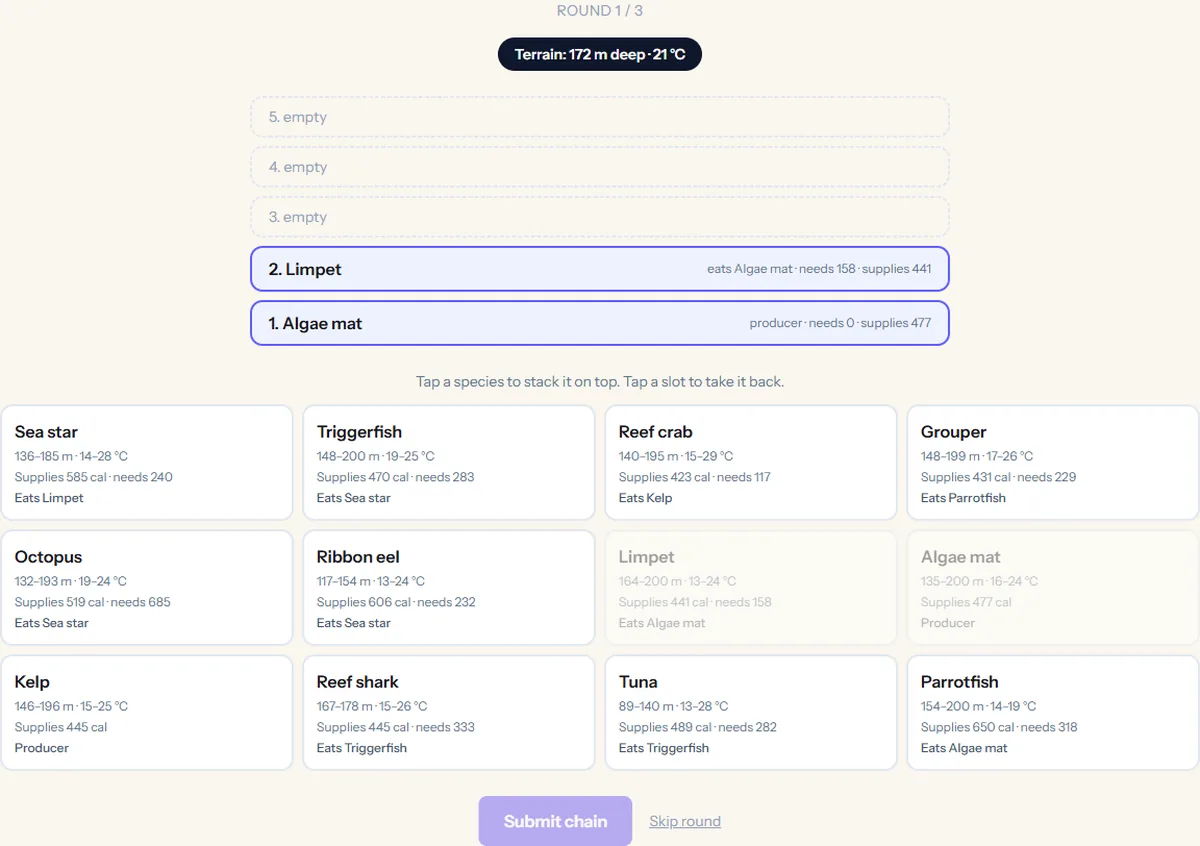
The scenarios change and McKinsey publishes nothing, so treat any specific walkthrough — including the shape below — as indicative rather than a script. What is consistent is the kind of thinking being read.
Working within hard constraints. You are given rules that cannot be broken and resources that will not stretch. The first job is understanding what the constraints actually forbid, before you begin arranging anything. Candidates who start optimising before they have mapped the limits routinely have to unwind their own work.
Optimising, not just satisfying. A solution that merely obeys every rule is the floor, not the goal. There is generally a better and a worse legal answer, and the gap between them is where the score lives.
Holding several interacting variables at once. Change one thing and two others move. This is the part that loads working memory hardest, and the part that punishes an approach kept only in your head.
Time discipline. The clock does not forgive exploration you never converted into a committed decision.
Process is read alongside outcome
This is the single most useful thing to internalise about Solve as a whole, and it applies squarely here.
The assessment records how you worked — the order you did things in, what you revisited, whether your decisions followed a consistent logic, whether you ran out of clock. Two candidates who land on similar answers can be read very differently: one methodically, one by thrashing until something stuck.
The practical consequence: do not abandon a sensible method halfway because it feels slow. Erratic strategy-switching reads worse than a steady approach that finishes slightly short of a perfect result. How the McKinsey Solve score is judged covers why there is no published pass mark and why chasing a target number is the wrong goal.
How to practise it
You cannot rehearse Sea Wolf itself. You can absolutely train the capacities it loads, and unlike the scenario, your progress there is measurable.
- Pathfinder puzzle — the closest analogue. Route and constraint reasoning, and specifically the look-before-you-move habit that constraint tasks reward and improvisation punishes.
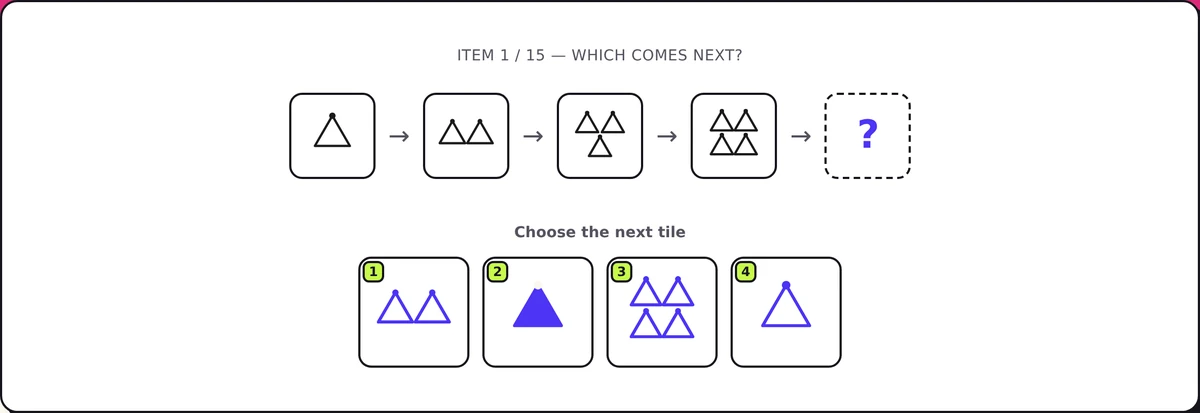
- Inductive reasoning — inferring the governing rule from what a system does, rather than from instructions.
- Mental math — fast numerical judgement, since optimisation questions are usually comparisons rather than precise calculation.
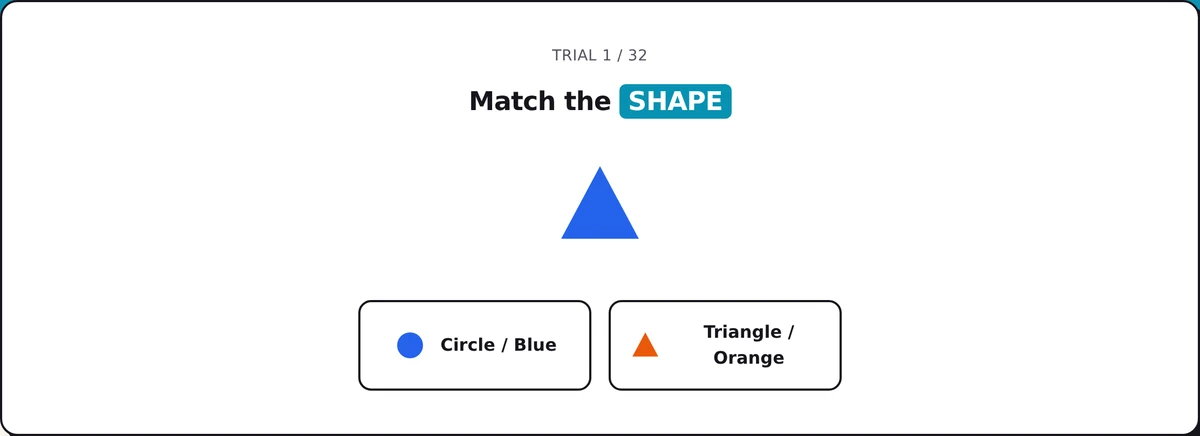
- Task switching — holding one rule set while another competes for attention, which is what interacting constraints feel like in practice.
Each run is scored on the server against fixed norms and returns a percentile, so one cold pass across these takes about fifteen minutes and tells you which is your weakest. That is where your remaining time should go — see how we score for what those percentiles are and are not.
Preparing in the days you have
- Baseline first. Play each related game once, cold, and write down your percentiles. Guessing at your weak spot without measuring is how people drill the wrong thing.
- Practise finishing. Set a timer and force a decision before it runs out. Running out of clock mid-exploration is one of the most common self-inflicted Solve outcomes.
- Rehearse a default method, so that under pressure you have something to fall back on instead of improvising: read every constraint, write down what is forbidden, find any legal solution, then improve it.
- Read the in-assessment tutorial properly. It is the only authoritative description of the version you are sitting. Every second-hand account, this page included, is at least a cycle behind.
- Fix the environment. Quiet room, laptop, notifications off. Constraint tasks are unusually sensitive to interruption because losing your mental state costs a restart.
For the wider picture, start from the McKinsey Solve guide, and Redrock since it comes first and gates this one.
FAQ
Is Sea Wolf the same as the ecosystem game? No. Older guides commonly said so, but candidates in 2026 report it as a distinct module with its own mechanics, unlocked after Redrock. Ecosystem Building is a separate, and increasingly retired, scenario.
What order do the McKinsey Solve games come in? Redrock first, then Sea Wolf, then Sustainable Futures Lab where it appears. Redrock must be completed before Sea Wolf becomes available.
How long is the assessment? Roughly 65 minutes for two modules or about 85 for three. Your invitation is the reliable indicator of which set you are sitting.
Can I get the answers to Sea Wolf? No, and they would not help. Scenarios change between sittings, and Solve grades your process as well as your result — a memorised answer cannot fake the methodical working the tool is watching for.
Is there a pass mark? None is published, and you will not be shown a score. Performance is weighed against other applicants for that office and cycle, alongside the rest of your application.
Does speed or accuracy matter more? A clean, systematic solution beats a fast one that violates a constraint. Managing the clock matters, but rushing into an illegal answer is worse than finishing slightly short.
What if my invitation names a game not listed here? Believe your invitation. McKinsey refreshes the scenario set regularly and runs regional variants; this page reflects what candidates most commonly report in 2026, not a guarantee.
GamePrep is an independent practice platform and is not affiliated with McKinsey & Company. McKinsey does not publish Solve's rules, scoring or cut scores, and the assessment changes between cycles — your invitation and its in-assessment tutorial are the only authoritative sources. We provide related skill practice only — no leaked questions or answers.