Criteria Cognify: The Three Games, What They Measure & Free Practice
Cognify is Criteria's game-based cognitive aptitude test — three interactive games covering problem solving, numbers and written text, in about ten minutes. What each measures, what is trainable, and how it differs from the trait-based batteries.
TL;DR: Cognify is a game-based cognitive aptitude assessment from Criteria, built around three interactive games covering problem solving, working with numbers, and interpreting and editing written text. It takes roughly ten minutes plus tutorials and runs on any device. Unlike behavioural batteries, it measures ability — which means it is genuinely trainable, and worth preparing for.
What Cognify is
Criteria offers several assessments — Cognify for game-based cognitive aptitude, the traditional CCAT for the same construct in multiple-choice form, and GAME and Emotify covering other dimensions. Cognify is the one you will meet if an employer wants a fast, validated read on general cognitive ability without a traditional multiple-choice aptitude test.
Three things make it distinctive:
- It is short. About ten minutes of actual assessment, plus tutorial time. That is a fraction of a classic battery.
- It is device-agnostic. Designed to work on a phone as well as a laptop — though see the caveat below.
- It measures aptitude, not personality. There is a right answer, which is the whole reason preparation pays.
Criteria does not publish item internals and employers configure what they use, so your invitation is authoritative, including over this page.
The three games and what they load
Problem solving. Working out how to get from a situation to a goal, typically under constraints. This is the part that rewards planning before acting rather than improvising — the same instinct the pathfinder puzzle drills, where mapping the route first beats moving and correcting.
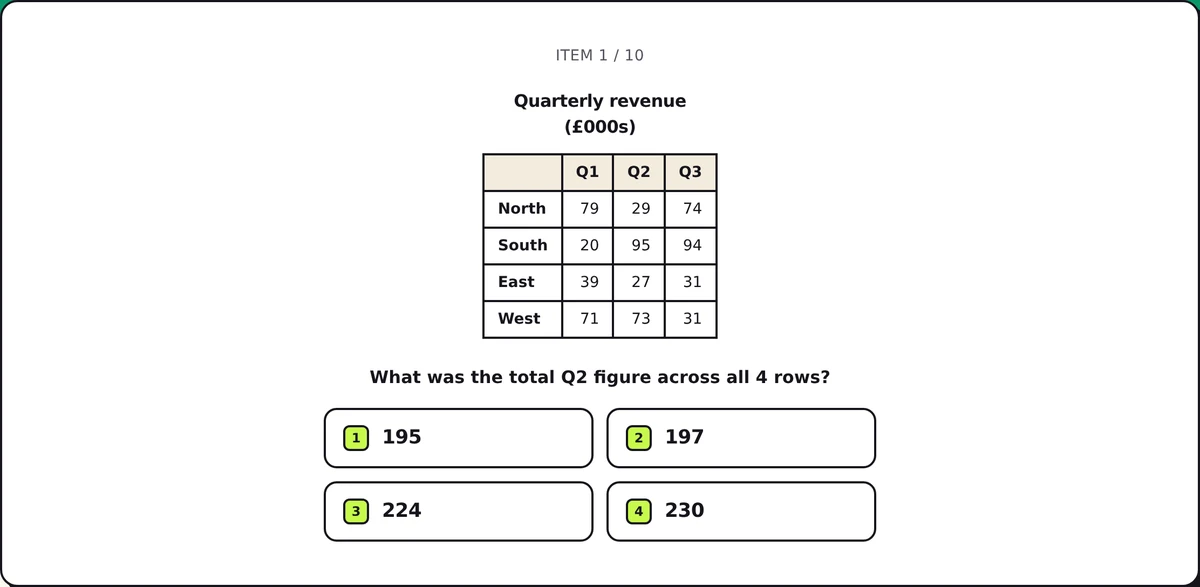
Working with numbers. Fast, accurate numerical judgement rather than heavy calculation. Two things help: making the arithmetic automatic so your attention goes to the decision rather than the sum (mental math), and getting comfortable reading quantities and data at speed (numerical reasoning, numerosity).
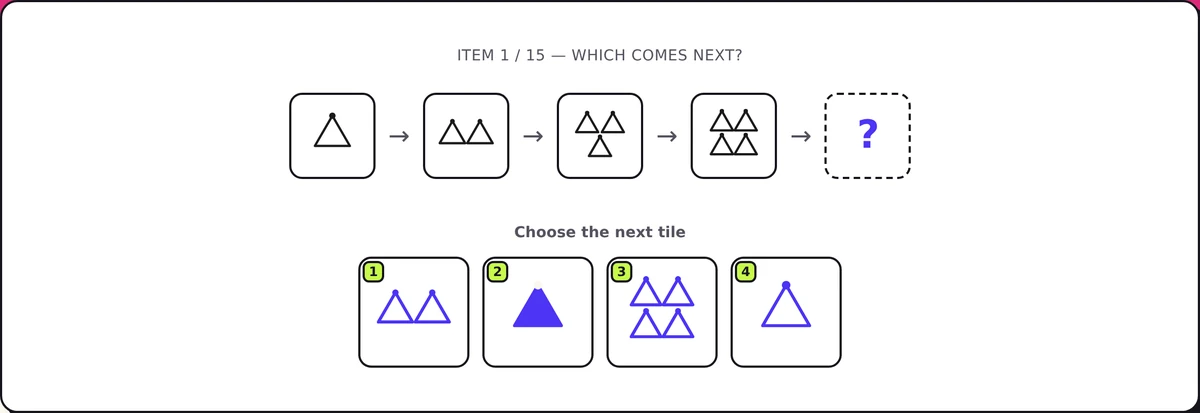
Interpreting and editing written text. Reading closely enough to spot what is wrong or what follows. We do not have a verbal clone, and we would rather tell you than stretch a claim. What transfers partly is general rule-inference — noticing the pattern that governs a set — which inductive reasoning trains.
Every run here is scored server-side against fixed norms and returns a percentile, so a single cold pass tells you which of the transferable skills is weakest. See how we score for what those percentiles mean.
Why "ten minutes" changes your preparation
A short assessment is not an easy one — it is a dense one. Two practical consequences:
There is no warm-up window inside the test. In a 45-minute battery you can find your rhythm in the first few items. In ten minutes, a cold start is a meaningful share of your total. Play two or three practice rounds immediately before you begin.
A single lapse costs proportionally more. With fewer items, one careless stretch moves your result further than it would across a long test. Quiet room, notifications off, and do not attempt it in a gap between other things.
Phone or laptop?
Cognify is built to work on any device, and that is genuine. But "works on a phone" and "is your best setting" are different claims.
If the games involve dragging, precise selection or anything timed to the millisecond, a laptop with a proper mouse or trackpad removes a source of error that has nothing to do with your ability. Unless you have no choice, use the bigger screen.
How it differs from the batteries you may have read about
Worth being clear, because preparation advice does not transfer between these:
- Cognify measures ability. There are correct answers, and practice improves your result.
- Trait and risk games — pymetrics' balloon task, Arctic Shores' behavioural tasks — measure who you are. There is no score to chase, and manufacturing a profile tends to backfire. The Arctic Shores balloon guide explains why.
If your process includes both, split your time accordingly: train the ability half, and play the trait half honestly and consistently.
Preparing in the days you have
- Baseline cold on the matching games and write down your percentiles. That takes fifteen minutes and stops you drilling the wrong thing.
- Short daily sessions on your weakest two. Numerical speed in particular moves within days.
- Rehearse the setup, not just the skills — the device you will use, in a quiet room, at a time of day when you are sharp.
- Read every tutorial fully. Three games means three rule sets, and on a ten-minute test you cannot afford to learn them live.
For the wider landscape see the complete guide to game-based assessments, and for why no employer publishes a threshold, what counts as a good game assessment score.
FAQ
What is Criteria Cognify? A game-based cognitive aptitude assessment made up of three interactive games measuring problem solving, working with numbers, and interpreting and editing written text.
How long does Cognify take? Roughly ten minutes of assessment, plus tutorial time before each game.
Can you practise for Cognify? Yes. It measures aptitude rather than personality, so problem solving, numerical fluency and close reading all respond to preparation — unlike behavioural batteries where there is nothing to train.
Can I take it on my phone? It is designed to work on any device. A laptop is still the safer choice where precision or timing is involved, since input friction costs you points that have nothing to do with ability.
Is there a pass mark? None is published, and you will not be shown a score. Results are compared against other applicants and to a bar the employer sets for the role.
How is Cognify different from Emotify or GAME? They are separate assessments in Criteria's range covering different dimensions. Cognify is the cognitive aptitude one; your invitation names which you are sitting.
What if I run out of time? Short adaptive-style assessments are commonly built so that few people finish everything. Steady accuracy generally scores better than rushing into errors.
GamePrep is an independent practice platform and is not affiliated with Criteria. Assessment names, formats and configurations vary by employer and change between cycles — verify everything against your invitation. We provide related practice only — no leaked questions or answers.