Arctic Shores Expressions Game
How the Facial Expressions Task Works, Timing, Tips & Free Practice
The Arctic Shores Expressions game (also called Emotions or the face game) shows faces one at a time and you label each with one of seven emotions. What Arctic Shores confirms, what prep sites report about the 50 faces and the timing, how the faces get harder, what helps, and a free practice version with drawn faces.
The Arctic Shores Expressions game, also called Emotions or the face game, shows you faces one at a time and asks you to label the emotion each one shows, from a fixed menu of seven. Arctic Shores' own 2026 candidate guide lists the task type "Interpret and label facial emotional expressions" (2026 candidate guide), and its help centre lists "Recognising facial expressions/ emotion recognition" as a reasonable adjustment category (Reasonable Adjustments). Prep sites report 50 faces that get more ambiguous as you go. Reports on the timing conflict. Play the free facial expressions game, with faces we draw ourselves, timed or untimed. Every Arctic Shores-style task we have is in one place: the free Arctic Shores practice test.
How the Arctic Shores Expressions game works
What candidates and prep sites describe (checked 25 November 2026):
- One face at a time, seven fixed answers. The menu has seven emotions and stays the same every round. GameAssessmentPrep names them as Ekman's set: "anger, contempt, disgust, enjoyment, fear, sadness, surprise" (GameAssessmentPrep).
- 50 faces. JobTestPrep: "out of 7 optional expressions. The game has 50 rounds" (JobTestPrep); GameAssessmentPrep and GameTestPrep give the same number.
- The faces get harder. JobTestPrep says "some expressions are intentionally vague, and sometimes the accurate expression is not listed". GameAssessmentPrep describes "expressions that become deliberately more ambiguous as the rounds progress".
- You click or tap one of the seven labelled buttons.
- Photographs or drawings? Reports differ. GameTestPrep says "photographed faces"; CandidateFalcon says "illustrated faces" (CandidateFalcon), and candidates summarised there say some "look AI-generated".
Arctic Shores doesn't publish the faces, the timing or how answers are scored. Your invitation and the task's own tutorial are the source of truth.
How long is it, and is it timed?
This is where the sources disagree most:
- GameTestPrep: "About 3 minutes", with "Fifty faces in three blocks, each block allowing less time than the last", and "Answer before the timer runs out, or the face is logged unanswered" (GameTestPrep).
- GameAssessmentPrep: "A 3-minute cap is reported by one source — our default is untimed per face with overall pacing."
- A candidate on Reddit advised taking your time "because the task is not about speed"; CandidateFalcon labels that unverified (CandidateFalcon summary of Reddit threads).
Because both versions are reported, our practice game offers both: untimed, or timed at 8, then 6, then 4 seconds a face across three blocks.
What does it measure?
Emotion recognition: how accurately you read a feeling from a face. JobTestPrep files it under "Emotional intelligence". How Arctic Shores scores it is not public. A reasonable guess is accuracy, perhaps per emotion, and response time; GameTestPrep adds that "What you confuse is as informative as what you get right".
Two honest caveats. First, a practice score on drawn faces is not a measure of your emotional intelligence, and says nothing reliable about how you would do in a job. Second, Arctic Shores reads all its tasks against other candidates and the role, not against a pass mark (see our Arctic Shores assessment guide).
What helps: reading the seven emotions
The descriptions below are the textbook facial actions for each emotion, from Paul Ekman and Wallace Friesen's Facial Action Coding System. They are also how our practice faces are built.
| Emotion | Brows | Eyes | Nose and mouth |
|---|---|---|---|
| Anger | Pulled down and together | Glaring, lower lids tense | Lips pressed thin |
| Contempt | Mostly neutral | Mostly neutral | One mouth corner tightened and raised |
| Disgust | Lowered a little | Narrowed | Nose wrinkled, upper lip raised |
| Fear | Raised and pulled together | Wide open | Mouth stretched sideways, often open |
| Happiness | Relaxed | Narrowed by raised cheeks | Corners pulled up and out |
| Sadness | Inner ends raised | Upper lids drooping | Corners pulled down, chin pushed up |
| Surprise | Raised high and curved | Wide open | Jaw dropped, mouth round |
The pairs people mix up most, and the one feature that separates them:
- Fear or surprise? Both have wide eyes and raised brows. In fear the brows are pulled together and the mouth stretches sideways; in surprise the brows arch and the mouth drops open.
- Disgust or anger? Disgust lives in the nose and upper lip; anger lives in the brows and pressed lips.
- Contempt or happiness? Contempt is one-sided. If only one corner of the mouth moves, think contempt.
- Sadness or fear? Both raise the inner brows. Sadness pulls the mouth corners down; fear pulls them sideways.
Look at the eyes and brows first, then the mouth: the mouth draws your attention, but the brows decide most of the hard cases. In later faces, more than one emotion may be showing; pick the strongest.
How to practise
- Play the facial expressions game. 50 faces in three blocks: clear faces first, then fainter ones mixed with a second emotion, as the real task is described. Choose untimed or timed. The result shows faces labelled right, your average time per face, your accuracy per emotion, the pairs you mixed up most, and every face you missed with the emotion it was drawn to show. Every face is drawn by our own generator from facial-action settings: no photographs, and not Arctic Shores' faces.
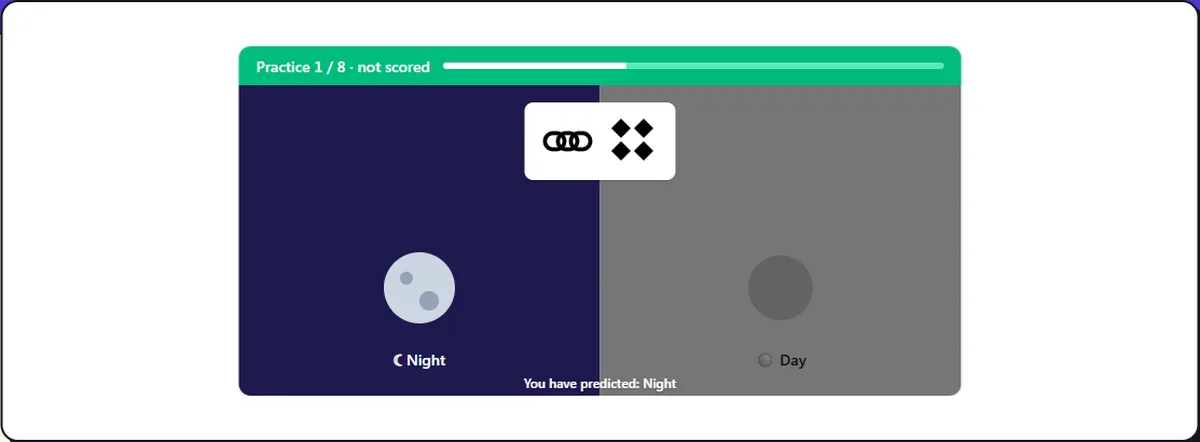
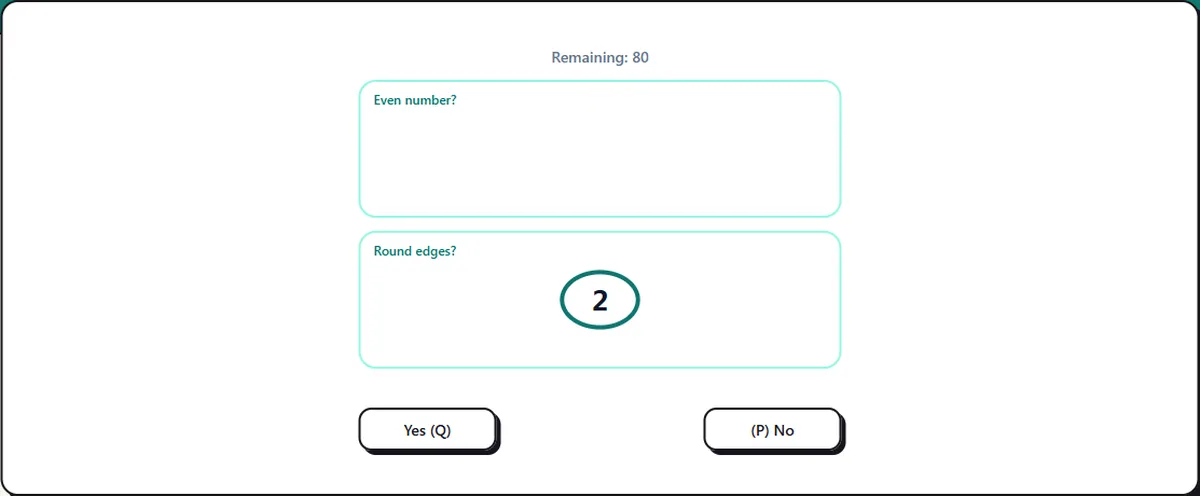
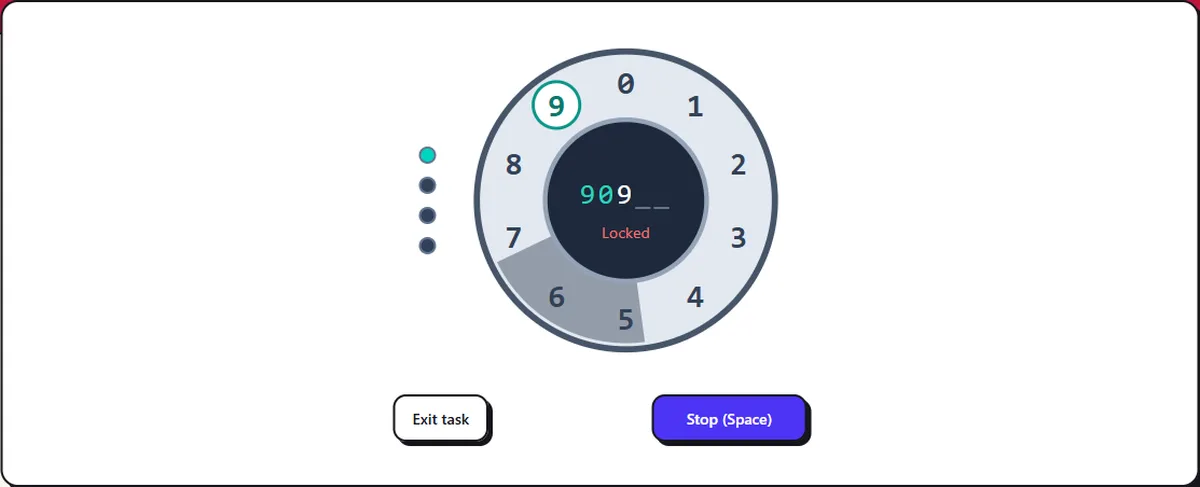
- Practise the rest of the battery. Expressions is usually one task among several. Employers who report it also report Tickets and Security, for example (see below): practise the ticket game and the day and night (predict) game.
- Ask for an adjustment if you need one. Arctic Shores lists emotion recognition as a reasonable adjustment category. If you are autistic, or anything else makes reading faces harder, ask the employer or Arctic Shores support before you start.
Who uses the Expressions game?
Candidates report it in these assessments:
- Airbus graduate programme, September 2025: "Several candidates reported three tasks: Tickets, Expressions (some called it Emotions) and Security" (CandidateFalcon). See our Airbus guide.
- Jet2 FlightPath 2026 applicants mention a "face task" (Student Room). See our Jet2 guide.
- GameAssessmentPrep also lists Maven Securities and Stantec.
What else is in the Arctic Shores assessment?
The Arctic Shores assessment guide covers every task and how the scoring works. The other task guides cover the patterns game, the tiles (sequence) game, the order game, the balance game, the ticket game and the day and night (predict) game.
FAQ
What is the Arctic Shores Expressions game? A task in the Arctic Shores assessment where you label the emotion on a series of faces. Arctic Shores lists the task type "Interpret and label facial emotional expressions"; prep sites report 50 faces and seven fixed emotions.
Which emotions are in the Expressions game? Prep sites report seven: anger, contempt, disgust, enjoyment (happiness), fear, sadness and surprise, the set from Paul Ekman's research.
How many faces are there? 50, according to JobTestPrep, GameAssessmentPrep and GameTestPrep.
Is the Expressions game timed? Reports conflict. GameTestPrep describes about three minutes in three blocks with less time per face each block; GameAssessmentPrep treats it as untimed per face; a candidate said it is "not about speed". Practise both ways.
Is there a right answer for every face? Prep sites say some faces are deliberately vague and sometimes the accurate expression is not listed. Pick the strongest emotion you see and move on.
Are there Expressions game answers? No. Arctic Shores does not publish its faces or scoring, and the faces vary. What you can practise is the method: brows and eyes first, then the mouth.
Can I get an adjustment? Yes, you can ask. Arctic Shores lists recognising facial expressions among its reasonable adjustment categories.
Is the free practice game the real task? No. It is an independent practice version with faces we draw ourselves. It shows accuracy and speed on this format only.
GamePrep is an independent practice platform and is not affiliated with Arctic Shores. Arctic Shores does not publish its task rules; the details above come from Arctic Shores' public pages and from prep providers, and assessments change, so verify everything against your invitation. We provide practice only: no leaked questions or answers.