Arctic Shores Results
How to Read Your Candidate Feedback Report
Your Arctic Shores results report shows "dimensions" on a four-point scale against a comparison group, with feedback statements. What each part means, what the employer sees, and which tasks feed which traits.
Your Arctic Shores results arrive as a Candidate Feedback Report, emailed automatically once you finish every task: it shows a set of "dimensions" on a four-point scale against a comparison group, with descriptive feedback statements, strengths and tips. A dimension is, in Arctic Shores' words, "something that enables you to reach your potential". Landing at either end of a scale means your behaviour is more distinctive than most of the comparison group; it does not mean good or bad, and the report contains no pass mark. The employer receives your score separately and compares it with its own benchmark for the role, which you are not shown. Arctic Shores does not publish which task feeds which dimension, but its own guides and candidates' reports point to most of the links, set out below.
What does the Arctic Shores feedback report show?
Arctic Shores' help centre and its 2026 candidate guide describe the same structure:
- Dimensions. "The report is broken down into different 'dimensions'", defined as "something that enables you to reach your potential" (Arctic Shores help centre). The 2026 guide says dimensions combine "your underlying qualities and the associated workplace behaviours".
- A four-point scale per dimension. It "puts your score in the context of the wider population".
- Feedback statements. You can "explore the detailed feedback statements to learn more about the insights we gathered from your assessment responses".
- Strengths, development areas and tips. The 2026 guide says the report "highlights your strengths and areas for development", "emphasises individuality rather than being 'good' or 'bad' at something", and "offers alternative approaches and practical tips" (2026 candidate guide).
- Eight languages. English, Spanish, French, Italian, Dutch, German, Chinese and Arabic.
How do you read the four-point scale?
Arctic Shores' own rule of thumb (help centre):
- At either end: "your performance is more distinctive, making you more likely to display certain behaviours compared to most people in the comparison group."
- Near the middle: "you're as likely or slightly more likely than others in the comparison group to behave in a certain way."
So a dimension is a direction, not a grade. An end-of-scale result on a risk dimension, for example, tells you that you take decisions involving risk more cautiously (or more instinctively) than most comparable candidates. Whether that suits the job depends entirely on the job. As the help centre puts it: "every employer is looking for something different, so there are no right or wrong results!"
Who are you compared with? A comparison group "built from thousands of candidates who have completed the same assessment", chosen to fit the role: "a graduate-level role will use a comparison group of graduate candidates" (2026 candidate guide).
What does the employer see, and is it the same as my report?
Not exactly. The 2026 guide says "your score is shared with the organisation you applied to, who will have determined a benchmarking approach that meets their needs". The help centre adds that results are "compared to an ideal 'framework' of behaviours for the specific role and culture", so "only the most essential behaviours for the specific role and organisation will be taken into account" (I disagree with my results).
That has two consequences:
- A strong-looking report does not guarantee progression, and a report you dislike does not mean rejection. The decision rests on the few dimensions that matter for that role, against a bar you do not see.
- Arctic Shores does not tell you whether you progressed. It says it is "only the assessment provider" and sends you to the employer's contact in your invitation email (help centre).
Candidates feel this gap. One on r/recruitinghell wrote that after "two months on this application" they were "immediately rejected because of my Arctic Shores results" (Reddit). That is one person's experience, but it is why it helps to know that the report you read and the benchmark the employer applies are different things.
What are the dimensions called?
Arctic Shores now groups what it measures into "Skill-enablers™", in three families its psychologists described in October 2024 (Arctic Shores podcast):
- Thinking: "your curiosity, creativity, your ability to make decisions and problem solve".
- Interacting with others: "how someone can perceive emotions in others to then understand the nuances of a situation and respond in the right way".
- Self-management: your "ability to sort of control your emotions and your thoughts", to "overcome challenges, cope in those more pressurized situations", and "your flexibility and your ability to sort of adapt to different demands or switch what you're doing".
The individual dimension names in your report depend on the tasks your employer chose. For a feel of how they read, Arctic Shores publishes an older example report from 2020, in a format that has since changed (example candidate report, PDF). It grouped scales under Personal Style, Cognition, Drive, Interpersonal Style and Thinking Style, each a pair of opposite ends, such as:
- "Tends to take more time when processing information" ↔ "Tends to process information quickly"
- "Tends to 'bounce back' more slowly after set backs" ↔ "more quickly after set backs"
- "Less accurate emotion recognition" ↔ "More accurate emotion recognition"
- "More focused on personal needs" ↔ "More focused on needs of others"
- "Tends to deliberate carefully on decisions that involve risk" ↔ "Tends to trust instincts on decisions that involve risk"
That example also said "only 1-2% of people fall at the extreme ends" of a scale, and that a report "is likely to remain a good reflection of your psychological characteristics for 9-12 months". Treat those as statements about the 2020 format; the 2026 guide says more simply that "candidates produce broadly consistent results over time".
Which Arctic Shores tasks feed which traits?
Arctic Shores says "multiple tasks" measure "multiple traits" and does not publish the mapping (help centre). The table shows the most likely links and, in the last column, what each link rests on. Where it says "our reading", that is our inference from the task's mechanics, not an Arctic Shores statement.
| Task (our guide) | Family | Traits it most likely feeds | Basis |
|---|---|---|---|
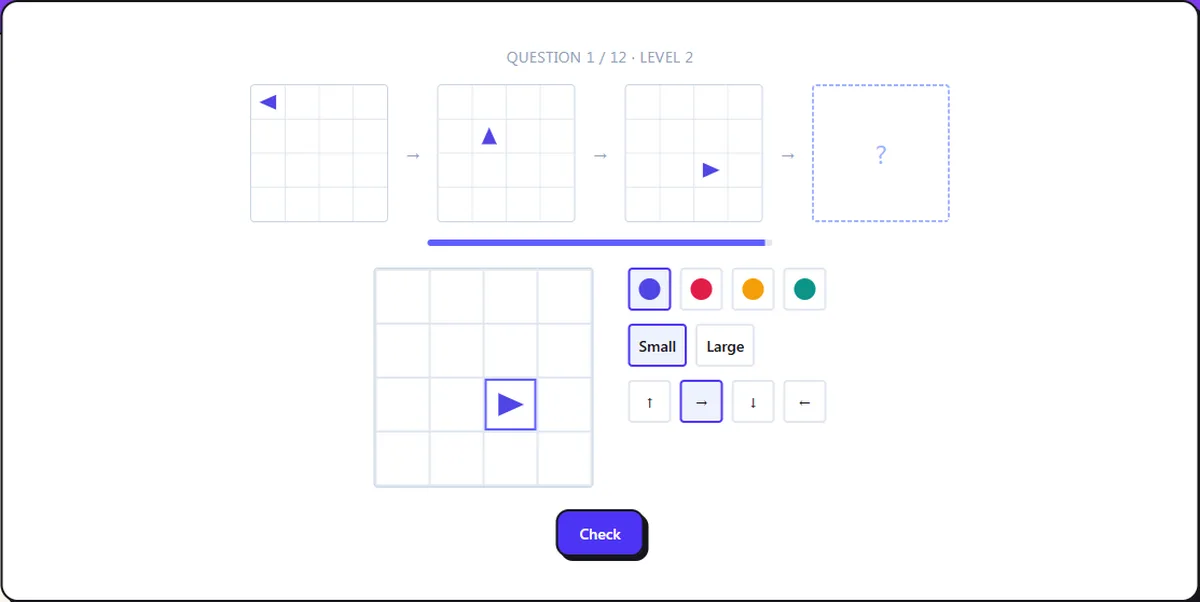
| Order | Thinking | Abstract reasoning | Arctic Shores calls it "our abstract inductive reasoning task" (podcast) |
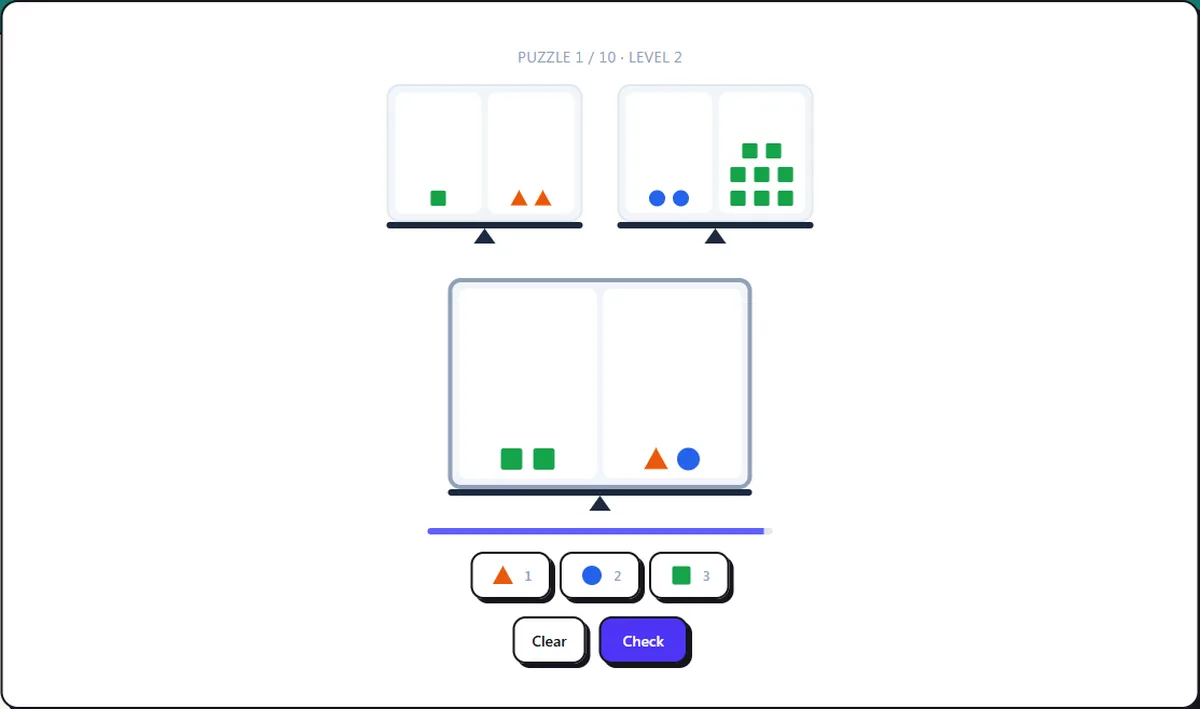
| Balance | Thinking | Numerical and logical reasoning | 2026 guide lists tasks on "quantitative and mathematical concepts"; link to Balance is candidates' and our reading |
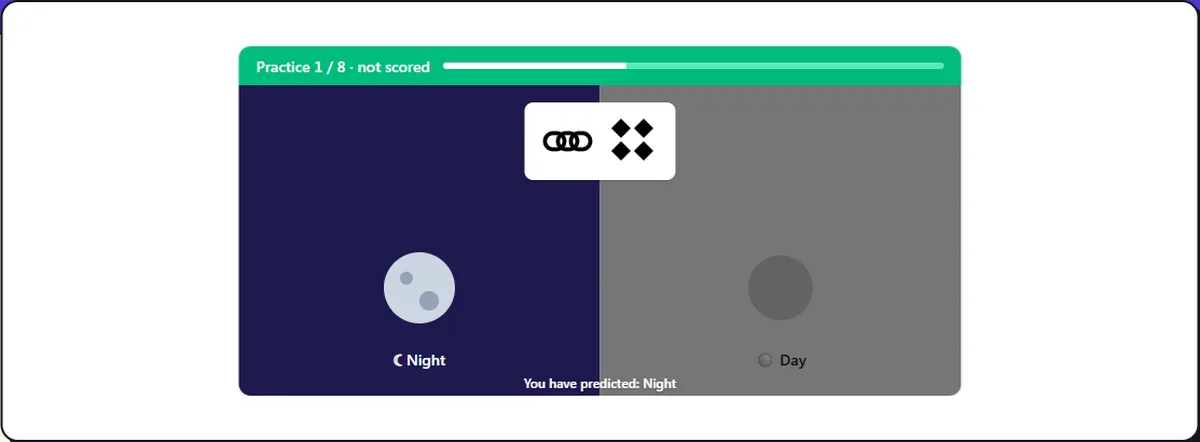
| Predict (day and night) | Thinking | Learning from feedback, handling uncertainty | 2026 guide: "use information and feedback from the task to make a series of predictions" |
| Energy | Thinking | Decisions involving risk, deliberate vs instinctive | Our reading, matching the 2020 risk scale |
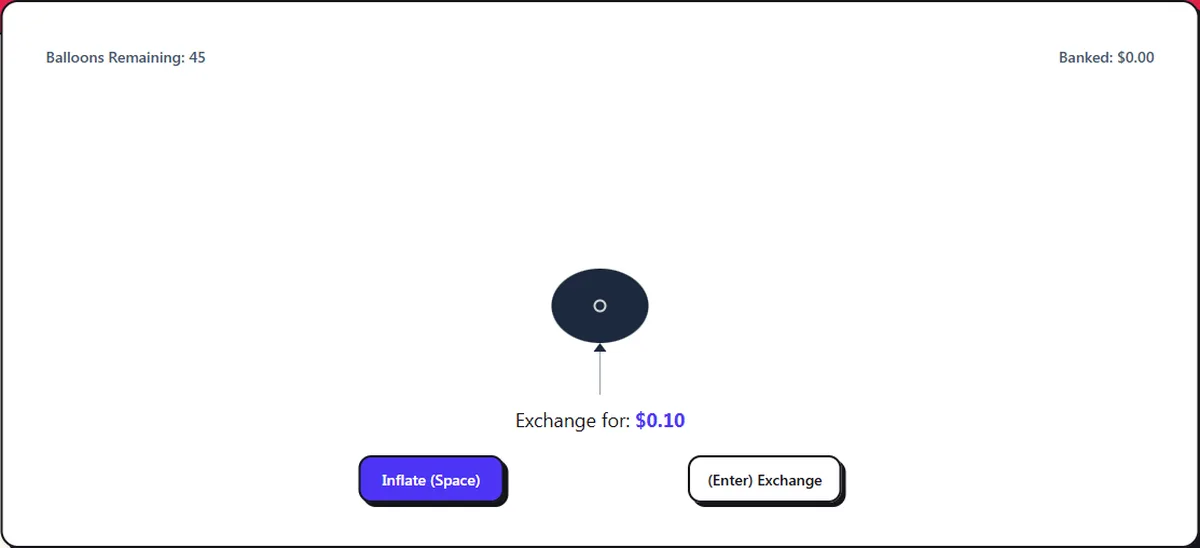
| Balloon | Thinking | Risk appetite, response to reward | Our reading, matching the 2020 risk and reward scales |
| Team Sales | Interacting with others | Own needs vs others' needs, adjusting to others | Our reading, matching the 2020 interpersonal scales |
| Ticket | Self-management | Switching, adapting to changing demands, processing speed | 2026 guide example on "changing demands" and to "switch between tasks"; one candidate's report (video) |
| Direction | Self-management | Focus, response inhibition, processing speed | Same candidate's report links arrows and tickets to the speed scales; otherwise our reading |
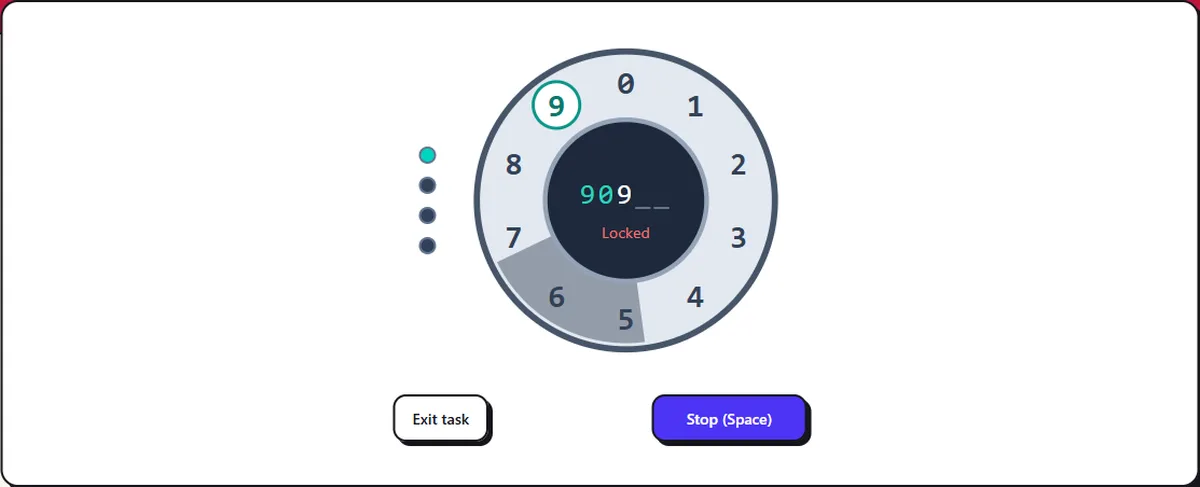
| Security (lock) | Self-management | Persistence, bouncing back after setbacks | Arctic Shores' public commentary on the task, described in our lock guide |
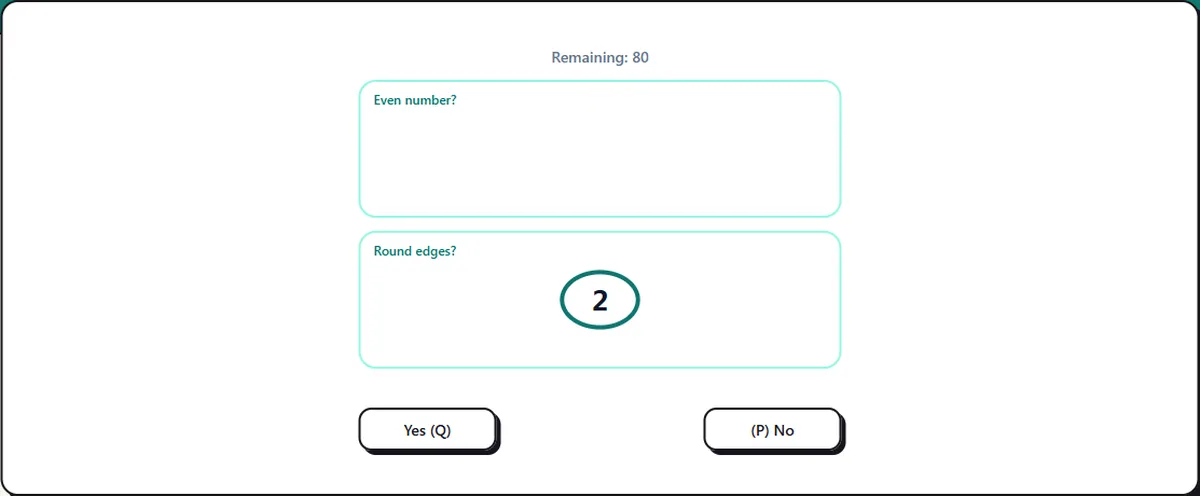
| Expressions (no game) | Interacting with others | Emotion recognition | 2026 guide lists "interpret and label facial emotional expressions" |
What if your results surprise you?
Arctic Shores lists three reasons a result can feel wrong (I disagree with my results):
- How you took it. Distractions and notifications "may slightly skew a candidate's results".
- A different reference point. You may seem very confident next to friends and family, but the report compares you "to thousands of people".
- Natural versus learned behaviour. The assessment captures your "default" behaviours, especially under pressure; you can "stretch" yourself at work, but that "may require more effort to maintain over time".
It also explains why another personality test may say something different: those tests "rely more on how you 'see' yourself", while the tasks measure what you do (help centre).
How can you prepare so the report reflects you?
There is no target profile to aim for, and Arctic Shores warns that following unofficial guides can produce "poor or invalid measures" (Do I need to practice?). What you can do is make sure the cognitive tasks measure your real ability, not your first encounter with the format:
- Play each task you expect once or twice: Predict, Balance, Order, Ticket, Direction and Lock. Our data on repeat attempts is in does practice improve assessment scores.
- Play the behavioural tasks (Balloon, Energy, Team Sales) once, for the format only.
- Take the real assessment somewhere quiet, with notifications off.
For the whole assessment, including which employers use it, see the Arctic Shores practice test and assessment guide.
FAQ
When do I get my Arctic Shores results? The report is generated and sent to your email automatically when you complete the assessment. It is only sent once you have finished all the tasks.
I haven't received my Arctic Shores report. What should I do? Check your junk or spam folder and make sure every task is complete. If it still has not arrived, Arctic Shores says to contact the company you applied to, which can re-send it (help centre).
What is a good Arctic Shores result? There is no single good result. Each dimension is a direction compared with similar candidates, and employers look for different profiles. Arctic Shores says "there are no right or wrong results".
Does my report show whether I passed? No. The employer compares your score with its own benchmark for the role and tells you about next steps. Arctic Shores does not decide or announce progression.
Do my results change if I take the assessment again? Arctic Shores says the assessment measures "more stable aspects of your potential" and that "candidates produce broadly consistent results over time". Cognitive tasks can still shift a little with familiarity or a better testing environment.
What does a 4 out of 4 mean on my report? A result at the end of the scale means your behaviour on that dimension is more distinctive than most of the comparison group, in the direction the label describes. It is not a top mark; whether it helps depends on the role.
GamePrep is an independent practice platform and is not affiliated with Arctic Shores. Quotations come from Arctic Shores' public help centre, candidate guide, example report and podcast as of 7 November 2026; the task-to-trait links marked "our reading" are our own inference. We provide practice only — no leaked questions or answers.