Saville Assessment
Swift Aptitude Tests and the Wave Questionnaire Explained
Saville Assessment sends two kinds of test - Swift aptitude tests (short combined verbal, numerical and diagrammatic or technical sections on a strict clock) and the Wave behavioural questionnaire, where you rate statements and then rank ties. Which range you get, what each section asks, official practice and how to prepare.
Saville Assessment sends two kinds of test: Swift aptitude tests, which pack short verbal, numerical and diagrammatic (or technical) sections into one strictly timed sitting, and the Wave behavioural questionnaire, where you rate statements about yourself and then rank the ones you rated the same. Saville matches the aptitude test to the level of the job, from entry roles and early careers to professionals and managers, with a separate Executive Aptitude test for senior hires; every candidate gets "the same number of items at the same difficulty levels", drawn from a randomised bank (Saville, aptitude tests). Wave comes in three lengths, from about six minutes to about 35 (Saville, behavioural assessment). Saville publishes free timed practice for every aptitude test on its site, which is the place to start. For the section types, our free verbal reasoning, numerical reasoning and abstract reasoning tests are the closest GamePrep practice.
Saville Assessment at a glance
| What Saville says | |
|---|---|
| Aptitude tests | "Verbal, numerical and diagrammatic reasoning", matched to the hiring level; single verbal, numerical and abstract tests also available |
| Swift | Combined short tests; Saville's practice page lists Swift Analysis, Swift Comprehension, Swift Technical, Swift Apprentice, Swift Executive and Swift Global |
| Adaptive? | No. Same number of items at the same difficulty for everyone, from a randomised bank |
| Behavioural questionnaire | Wave: Professional Styles (about 35 minutes, untimed), Focus Styles (about 13 minutes), Match 6.5 (about six minutes) |
| Wave format | "Candidates rate each statement, then rank the ones they scored the same" |
| Official practice | Free timed practice for each aptitude test, repeatable, with feedback on every question (Saville practice tests) |
| Devices | Several tests (including Swift Analysis, Swift Comprehension and Swift Technical) cannot be taken on a phone |
The Swift aptitude ranges
Saville groups its practice tests into ranges that tell you a lot about the job level (Saville practice tests):
| Range | Tests in it | Typical level |
|---|---|---|
| Analysis Aptitude | Swift Analysis Aptitude, Swift Analysis Verbal & Numerical, Swift Executive Aptitude, Verbal Analysis, Numerical Analysis, Diagrammatic Analysis, Abstract Reasoning | Graduate, professional and managerial |
| Comprehension Aptitude | Swift Comprehension Aptitude, Swift Comprehension Verbal & Numerical, Verbal Comprehension, Numerical Comprehension, Error Checking | Entry level, administrative and customer roles |
| Technical Aptitude | Swift Technical Aptitude, Swift Apprentice Aptitude, Spatial Reasoning, Mechanical Reasoning, Diagrammatic Reasoning | Engineering, technical and apprentice roles |
| Global | Swift Global Aptitude | International screening |
The "typical level" column is our reading of the range names and Saville's level matching; your invitation names the exact test.
Swift Analysis Aptitude is the one graduates meet most. It combines verbal, numerical and diagrammatic sections in one sitting. Saville does not print its timing on the practice page; prep sites consistently report about 18 minutes, six per section, which means a few questions a minute. Saville's own warning is worth taking literally: the practice tests are for "working to strict time limits", and "the difficulty of the example questions does not necessarily represent the difficulty level of the test itself".
What each section asks
Saville's product pages name the sections but do not describe the item types; the descriptions below are what its free practice tests show and what prep sites consistently report.
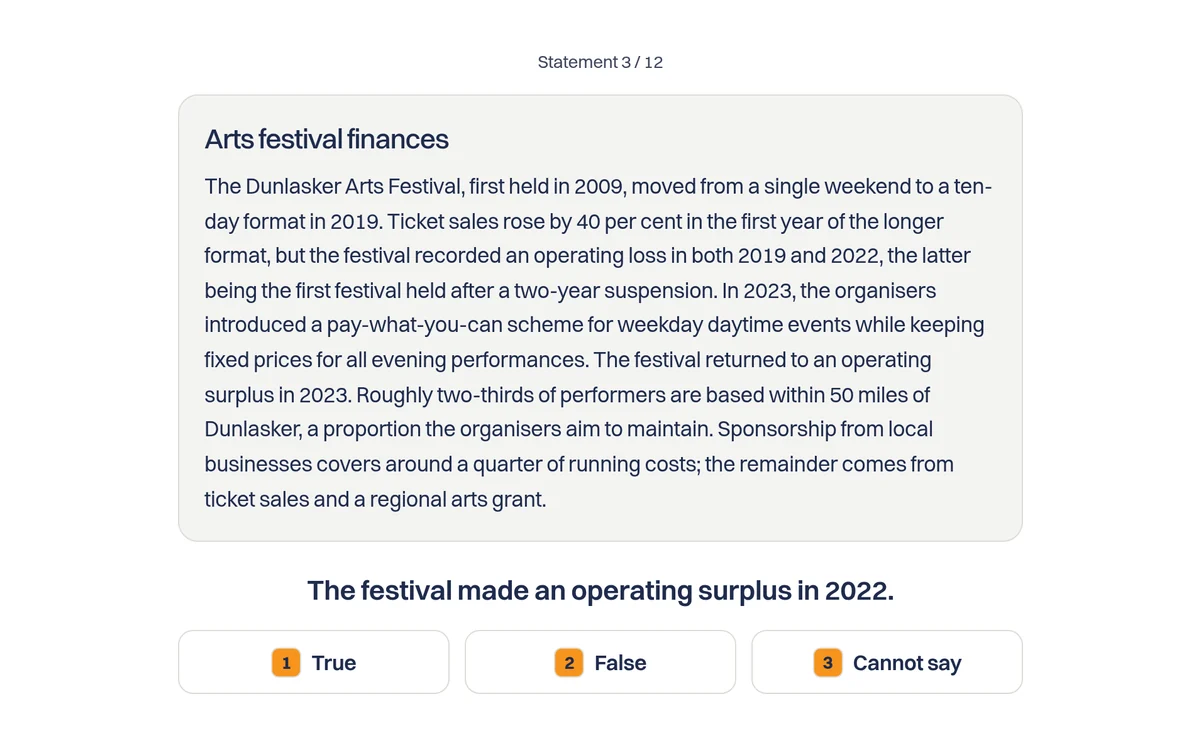
- Verbal: a short passage and a statement to judge as true, false or cannot say from the passage alone. Our verbal reasoning guide covers the rules.
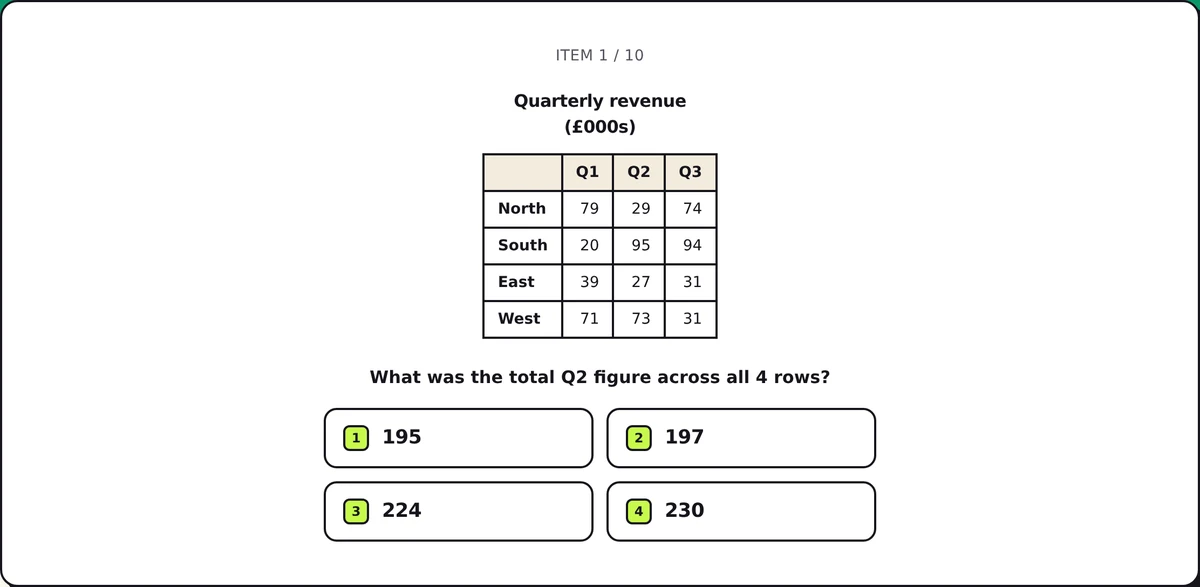
- Numerical: a small table or chart and a calculation (percentages, ratios, differences). See the numerical reasoning guide.
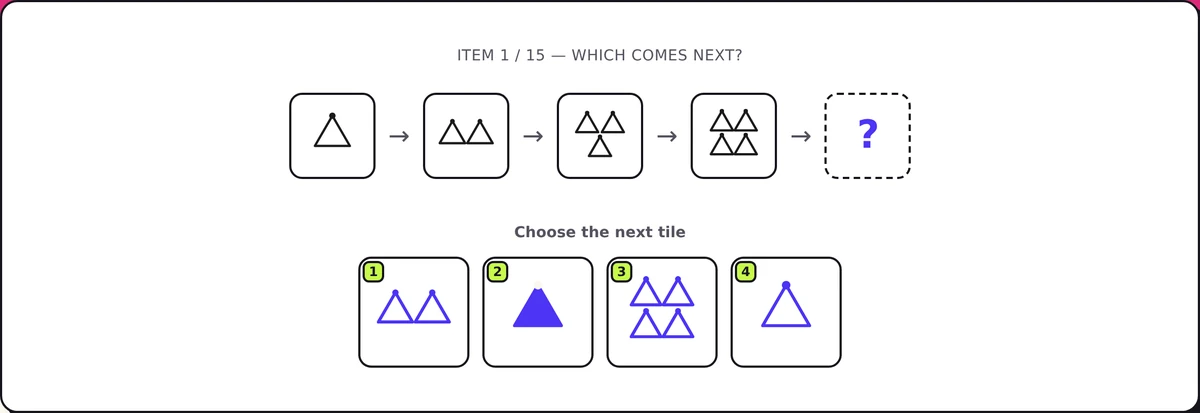
- Diagrammatic: shapes passing through a set of operators that change them; you work out the rule and the output. Our abstract reasoning test trains the rule-spotting part.
- Error Checking (Comprehension range): spot where two sets of information differ. The error-checking section of our e-tray guide explains the test type.
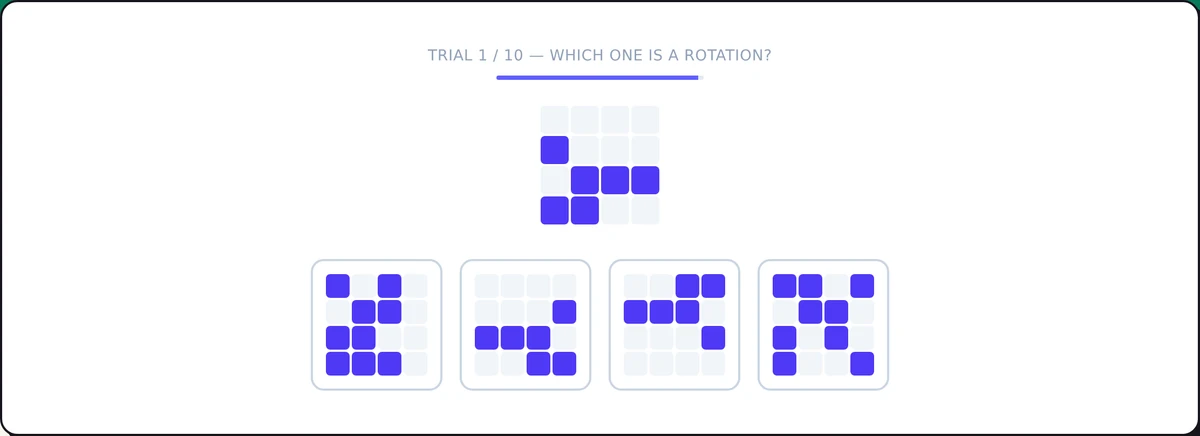
- Spatial and Mechanical (Technical range): rotate or fold shapes, and reason about levers, gears and forces. See our spatial reasoning test guide and mechanical aptitude test.
The Wave questionnaire
Wave is Saville's behavioural (personality) questionnaire. Saville's current product page describes three versions (Saville, behavioural assessment):
| Version | For | Length |
|---|---|---|
| Professional Styles | Leadership and senior appointments | About 35 minutes, "untimed, so nobody is scored on how fast they read" |
| Focus Styles | Professional and specialist roles; "the default for most hiring and development decisions" | About 13 minutes |
| Match 6.5 | Early careers and high-volume entry roles | "About six minutes" |
The format is distinctive: "Candidates rate each statement, then rank the ones they scored the same." Saville adds that Wave reads both talent and motive, meaning what you are good at and "what they want to do more of". Prep sites report that Professional Styles has 216 statements; Saville's page does not give item counts.
Two practical consequences. First, rating everything highly does not help, because ties go to a ranking step that forces you to choose. Second, because both "can do" and "want to do" are read, a profile that claims huge talent for things you show no interest in looks odd. Answer as your ordinary working self. Our work personality questionnaire has a rating section and a most/least ranking block in a similar spirit, and the personality tests for jobs guide covers how employers read profiles.
Who uses Saville Assessment?
Saville's own case studies name Jaguar Land Rover, which uses a Swift Aptitude Test as its second screening stage, and Fujitsu, which uses a Swift Executive aptitude test (Saville, aptitude tests). Prep sites also name GSK, Aviva, Coca-Cola and Transport for London among Saville users; we have not confirmed those with the employers, and processes change between cycles. Engineering and manufacturing employers are a common home for the Technical range, including apprentice schemes: see the degree apprenticeship online assessment guide.
How to prepare for a Saville test
- Take the matching official practice test on Saville's practice page. Repeat it: Saville lets you, and shows feedback for each question.
- Test your device first. Use a laptop or desktop at 1366 x 768 or higher. Several tests will not run on a phone, and pressing Back or leaving a test means asking Support to reset it, with your answers lost.
- Drill speed in each section. At roughly six minutes per section, the score is mostly about how many you get right in time. Short timed sessions on numerical, verbal and abstract reasoning build the pace.
- Do not stall. One stubborn item can cost three easy ones. Make your best choice and move on.
- For Wave, be consistent. Rate honestly, then rank ties by thinking of a normal working week.
- For Technical tests, add mental rotation practice and the mechanical aptitude test.
Comparing vendors? See Korn Ferry / Talent Q, Sova, SHL, the Thomas GIA and, for another personality-plus-ability battery, the Caliper test.
FAQ
What is a Saville assessment? An online test from Saville Assessment: either an aptitude test (often a Swift test combining verbal, numerical and diagrammatic or technical sections) or the Wave behavioural questionnaire, or both.
What is the Swift Analysis Aptitude test? Saville's combined aptitude test for graduate and professional roles, with verbal, numerical and diagrammatic sections in one strictly timed sitting. Prep sites report about 18 minutes, six per section; Saville's free practice version shows the format.
Are Saville tests adaptive? No. Saville says candidates get the same number of items at the same difficulty levels, drawn at random from a bank.
How long does Saville Wave take? Saville gives about 35 minutes for Professional Styles (untimed), about 13 minutes for Focus Styles and about six minutes for Match 6.5.
Can I practise Saville tests for free? Yes. Saville publishes free timed practice tests for each of its aptitude tests, which you can repeat. GamePrep's free verbal, numerical and abstract reasoning tests add extra practice on the same question types.
Is GamePrep affiliated with Saville Assessment? No. GamePrep is independent and not affiliated with Saville Assessment. Our tests are original practice in similar formats.
GamePrep is an independent practice site and is not affiliated with, endorsed by or connected to Saville Assessment. Saville, Swift and Wave are names of Saville Assessment's products, used here only to describe them.